Nyala/Ed Daein, November 10 (Darfur24)
Rufaida Haroun, 31, was scrolling through her phone in the courtyard of her family’s home in the Al-Nahda neighbourhood of Nyala when a blinding red light suddenly illuminated the area. Minutes later, a powerful explosion shook the neighbourhood.
She had recently subscribed to Starlink, the satellite internet service that has become a crucial means of communication in Darfur since conventional telecommunications services went down.
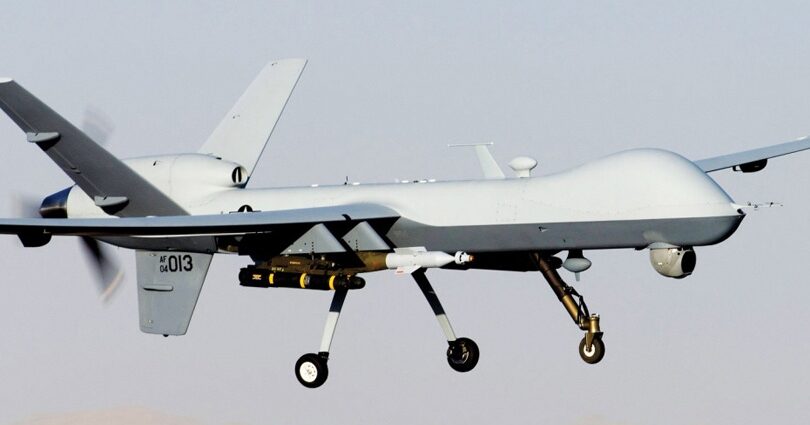
The explosion was caused by a drone strike on Dumaya, a neighbourhood adjoining Al-Nahda in western Nyala. The blast shook nearby homes, burst open closed doors and sent women and children screaming.
Rufaida told Darfur24 that the flash and force of the explosion caused her to lose consciousness.
“The light was so intense, and the explosion was so powerful that I passed out,” she said.
She said she remained unconscious for about 40 minutes.
“I could not sleep throughout the night after what happened,” Rufaida said, adding that she continues to experience health problems despite undergoing several medical examinations.
Her experience reflects the growing anxiety among civilians in Darfur, where the increasing use of drones has transformed daily routines, disrupted livelihoods, and heightened fears about personal safety.
For residents, the threat is no longer confined to the moments when explosions occur. It increasingly influences where they go, how they travel, whether they attend markets, and how they conduct their businesses.
In East Darfur’s capital, Ed Daein, residents say the threat of drone attacks has changed even their choice of transport.
Sulaiman Zakaria told Darfur24 that people have increasingly turned to smaller vehicles instead of larger cars, trucks and Land Cruisers, amid fears that conspicuous vehicles could expose them to danger.
For Ali Mohamed Hassan, the fear has changed his relationship with public spaces and social activities.
He told Darfur24 that he has stopped attending weekly markets and increasingly prefers to remain at home rather than risk being caught in an attack.
Weekly markets are important gathering points in Darfur, providing residents with opportunities to buy food and household necessities, trade goods, and maintain social connections. Avoiding them can therefore affect both livelihoods and access to essential supplies.
The growing presence of military vehicles in civilian neighbourhoods has added to these concerns.
Residents have reported seeing Rapid Support Forces (RSF) vehicles parked under trees and along streets in populated areas, raising fears that civilian neighbourhoods could be exposed to attacks.
One shop owner reportedly faced accusations after objecting to the presence of military vehicles in a civilian area, illustrating the difficulties residents encounter when trying to protect their communities in the presence of armed forces.
The consequences for local businesses have also been severe.
A trader in Ed Daein told Darfur24 that an overnight airstrike destroyed his shops, leaving him to deal with the loss of his business and the uncertainty surrounding his livelihood.
For traders and small business owners, the threat of attacks creates an additional layer of economic insecurity in communities already struggling with the consequences of war.
Across Darfur, the accounts point to a gradual transformation of civilian life. Once routine decisions, such as travelling in a particular vehicle, visiting a market or opening a shop, are increasingly shaped by calculations about security.
For Rufaida, the consequences of a drone strike extended beyond the immediate explosion. The experience left her unconscious, disrupted her sleep, and continues to affect her health.
For residents of Ed Daein, the changes are reflected in avoided market visits, altered transport choices, and businesses destroyed by airstrikes.
As drone attacks continue to affect civilian areas, the fear of being caught in an explosion is becoming part of everyday life in Darfur, forcing residents to adapt their routines in response to the growing reach of aerial warfare into civilian spaces.