Report, October 26 (Darfur24)
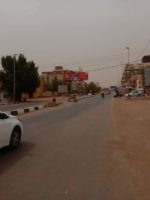
Caution continues to shape daily life in El Fasher, the capital of North Darfur State, a year after the Rapid Support Forces (RSF) seized the city. Residents who stayed or returned describe limited services, rising living costs, strict movement and communications controls, and continued arrests of people suspected of links to the Sudanese army.
Civilians told Darfur24 that men in particular face the risk of arrest on suspicion of spying for the army and its allied joint forces, amid limited humanitarian assistance and little independent oversight.
El Fasher now has fewer than 70,000 residents, compared with more than one million before the war, according to Amnesty International, citing humanitarian organizations operating in the city.
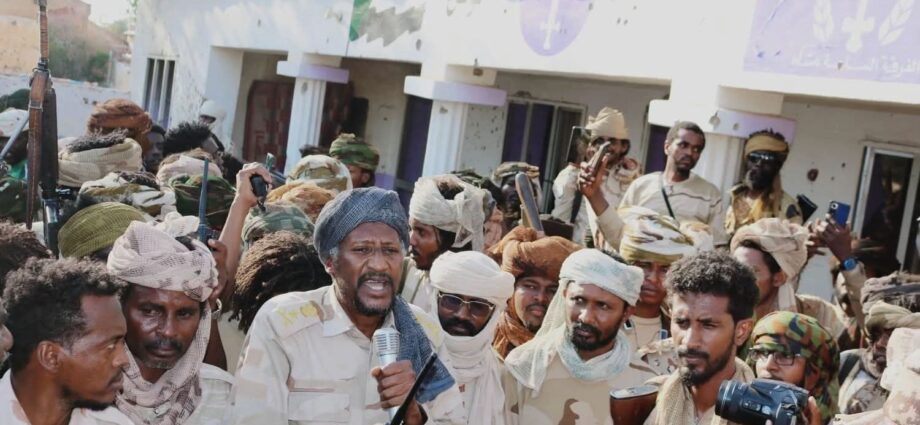
The RSF took control of El Fasher on October 26, 2025, after about 18 months of fighting with the Sudanese army and its allied forces, during which heavy weapons, warplanes and drones were used.
Daily life and rising costs
A resident who returned to El Fasher told Darfur24 that the RSF initially supported more than five bakeries that distributed bread for free. That assistance later declined, and the price of four loaves rose to 1,000 Sudanese pounds.
A sack of sugar costs between 300,000 pounds in cash and 350,000 pounds through banking applications, the resident said. Corn and some other commodities remain available, which he attributed partly to the city’s reduced population.
Health services resume
The RSF has rehabilitated several medical facilities damaged during the siege and brought in medical personnel from outside the city, according to sources who spoke to Darfur24.
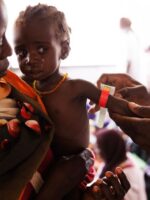
Two medical sources confirmed that the Saudi Hospital and El Fasher Teaching Hospital had been rehabilitated, with medical staff recruited from Nyala and surgery, paediatrics and maternity departments reopened.
A doctor working at one of the hospitals said the Health Ministry affiliated with the TASIS alliance had provided modern diagnostic equipment. Residents from neighboring areas were also travelling to El Fasher for treatment because medical services and medicines were being provided free of charge, the doctor said.
Patients receive treatment and medication without charge until they are discharged, she added.
Internet access under scrutiny
Residents said the RSF had imposed strict restrictions on internet access, with connectivity available only at certain locations. They alleged that intelligence personnel monitored users’ calls, voice messages and text messages when they suspected individuals of cooperating with the Sudanese army.
One resident said internet access at designated locations cost 1,000 Sudanese pounds per hour. He also alleged that people in civilian clothing affiliated with the military monitored users and directed the arrest of those they suspected.
These accounts could not be independently verified.
Water shortages persist
The RSF restarted several groundwater wells to supply neighborhoods in northern, central and southern El Fasher after the Qulu water station stopped operating.
A resident told Darfur24 that water was available from wells and tanker trucks at what he described as affordable prices. However, he said the groundwater was salty and potentially contaminated, requiring treatment before it could be safely consumed.
He added that attempts to restart the Qulu station had failed because of high costs, a shortage of engineers and technical experts, and damage to water tanks and pipes.
Schools reopen
Residents said the RSF had opened three primary and intermediate schools and two secondary schools, while prohibiting the collection of tuition fees under a decision issued by the city’s civil administration official and the RSF commander.
One resident said hundreds of pupils had enrolled in the three schools after private schools were barred from reopening.
The civil administration also organized primary and intermediate examinations in El Fasher, while other students sat their secondary school certificate examinations in June, the resident said.
Security controls and continued arrests
Residents said the RSF had deepened a trench around El Fasher that was originally dug during the siege, with work completed in June. They said the forces had designated four main entry points: Mellit Gate to the north, the eastern entrance, Nyala Gate to the southwest and Shaqra Gate to the west.
The measures were intended to control movement into and out of the city and curb widespread looting, according to residents.
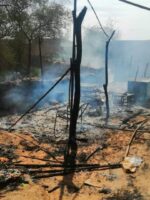
Despite the Sudanese army’s withdrawal, drone strikes on El Fasher have continued. Residents said several sites were bombed the previous week, including the government secretariat, military division buildings and other military positions.
Residents also said the RSF had trained some members in policing and recruited former police officers who had defected from forces supporting the Sudanese army. The forces subsequently opened a police headquarters and a complaints department, providing limited security at some locations in the market and at the Nifasha camp for displaced people north of the city.
However, residents said the RSF intelligence department and military police remained primarily responsible for security, including arrests and searches of homes and mobile phones for evidence of suspected cooperation with the Sudanese army and its allied joint forces.
Ahmed Al-Nour Ismail, an El Fasher resident, told Darfur24 that he travelled from Nyala to the city in July to visit his family home and inspect his property. An RSF unit stopped him and accused him of travelling to provide coordinates, he said, before transferring him back to Nyala.
Ismail said he was later released after a relative serving in the RSF provided a guarantee.
He described daily life as concentrated in a handful of neighborhoods, including Al-Radif, Al-Daraja Al-Oula, Al-Riyadh and Al-Wifaq, as well as parts of eastern El Fasher. Activity has also resumed to some extent in the city centre, particularly around the market and the Al-Ziyadiya and Krenik neighborhoods, he said.
Returns amid a cash shortage
Since the RSF took control of El Fasher, residents have returned from Tawila, about 55 kilometers west of the city, and Mellit, roughly 65 kilometers to the north, as well as nearby areas. A limited number of displaced people have also returned from shelters in Nyala.
However, large parts of El Fasher remain deserted. Before the city fell, UN reports indicated that more than one million people were living in El Fasher and the nearby Zamzam displacement camp.
Adam Abdu Al-Nour, a displaced resident, told Darfur24 that he moved his family to Tawila in August 2025, at the height of the fighting, at considerable expense. He returned to El Fasher in April because of the difficulties of living in the displacement camp.
Despite the resumption of some services and the availability of relief assistance, returns remain limited, he said. Parts of Nifasha market and the main market have reopened, with food supplies available, but cash remains scarce.
Al-Nour said the price difference between transactions made through banking applications and cash payments was close to 35 per cent, forcing residents to depend on bank transfers from outside the city.