Khartoum, August 20 (Darfur24)
The National Umma Party and the Umma Party have rejected, in its current form, an invitation by Sovereignty Council Chairman and Sudanese army commander Abdel Fattah al-Burhan for a Sudanese-Sudanese dialogue to be held inside the country, saying a ceasefire, a safe environment and the participation of all political and social forces must be guaranteed first.
In a joint statement, the two parties said Sudan’s crisis could not be resolved through dialogue held under the shadow of war or influenced by military balances of power. They said any dialogue should be a comprehensive national process aimed at ending the war, preserving the country’s unity and establishing a civilian democratic transition.
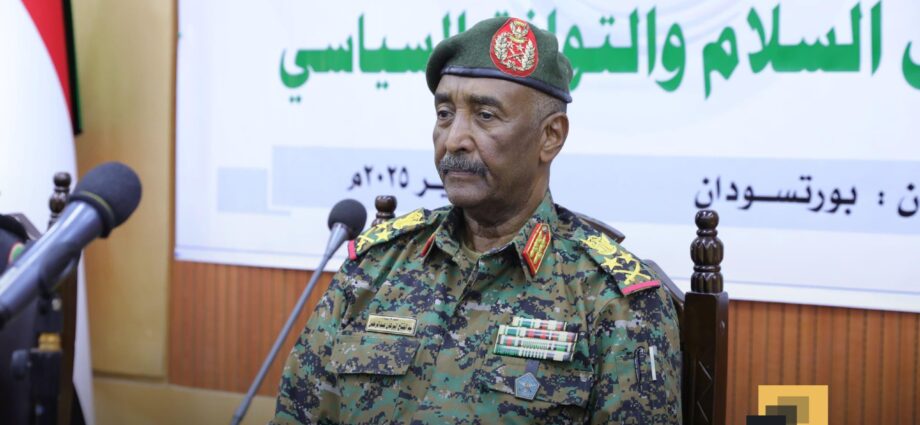
During a speech on August 15, Burhan called for a comprehensive Sudanese-Sudanese dialogue inside the country to complete state institutions, including the formation of a Legislative Council. He said legal, political, security and logistical guarantees would be provided to participants and that the state would not interfere in the dialogue’s agenda or outcomes.
The two parties stressed that a ceasefire must precede any comprehensive national dialogue, warning that continuing military operations alongside political talks could provide political cover for the war and turn the process into a means of buying time and reshaping the balance of power.
They said the military and geographical divisions and the distribution of areas of control among the warring parties made it difficult to hold a genuinely comprehensive dialogue inside Sudan. Millions of Sudanese, including displaced people and refugees, remain outside areas controlled by the current authorities, along with political and social forces and armed movements, the statement said.
The parties said assurances that the state would not organize the dialogue were insufficient to guarantee its independence. They called for guarantees on the neutrality of the sponsoring party, freedom to choose participants, an independent agenda, a secure venue, and clear mechanisms for decision-making and implementing outcomes.
They proposed holding the dialogue on a neutral and safe platform outside areas controlled by the warring parties, describing this as the most realistic option for ensuring equal participation.
The parties also said suspending criminal proceedings against participants would not be enough to create a suitable political climate. They called for an end to the war and security agencies’ interference in political activities, as well as lasting guarantees for freedom of expression, organization and legal protection.
They said the agenda of any national dialogue should include ending the war and humanitarian crisis, preserving Sudan’s unity and sovereignty, rebuilding a unified and professional national army removed from political and commercial activities, and establishing an independent civilian transitional authority.
The parties also called for adopting a transitional constitution, advancing reconciliation, transitional justice and reparations, facilitating the safe return of displaced people and refugees, and launching a comprehensive reconstruction programme leading to free and fair elections at the end of the transitional period.
They reiterated their rejection of any political process that legitimizes the reality created by the war or reproduces what they described as the totalitarian structures of the October 25 regime. At the same time, they opposed excluding political forces with genuine social support, provided they commit to democracy, Sudan’s unity, rejecting war and violence, and the peaceful transfer of power.
The two parties also supported a regional and international role in facilitating, rather than overseeing, the political process, saying such involvement should help provide a balanced and safe platform that guarantees inclusive and equal participation.
Burhan’s invitation followed consultations with political, civil and youth groups, community figures and religious leaders ahead of the proposed dialogue and efforts to establish a political and legal environment for participants.
The call has drawn mixed reactions from political forces. The Democratic Bloc welcomed the initiative, describing dialogue as necessary for reaching a comprehensive political settlement. Other civil forces and political alliances, including the Steadfastness Alliance, rejected it, arguing that holding talks inside Sudan while the war continues could legitimize the de facto authorities.
Other political and civil groups have also criticized the timing and conditions of the proposed dialogue, insisting that a ceasefire must come before any political process and that talks must be inclusive, neutral and free from the influence of military power.