New York, June 27 (Darfur24)
The United Nations has warned that a major escalation in El Obeid, the capital of North Kordofan State, could expose hundreds of thousands of civilians to widespread violence, saying the opportunity to prevent a full-scale battle is “rapidly closing.”
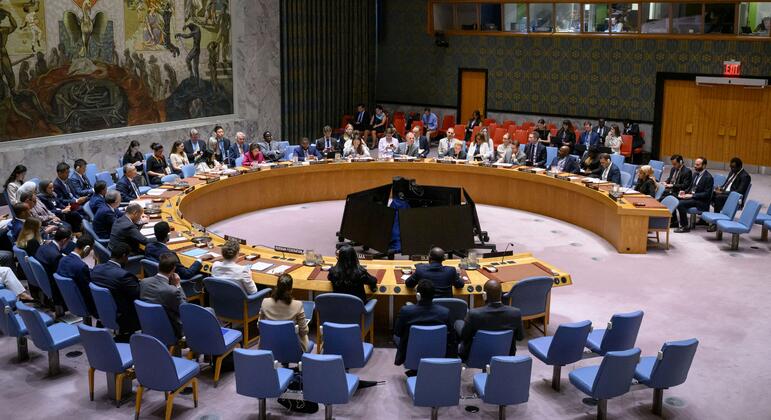
Addressing the UN Security Council on Thursday, Under-Secretary-General for Political and Peacebuilding Affairs Rosemary DiCarlo said a large-scale confrontation in the city would trigger fresh waves of displacement into already overstretched areas and further destabilize the wider Kordofan region.
“A full-scale battle would trigger new waves of displacement into areas already under enormous pressure, and would further exacerbate instability in the Kordofan region as a whole,” she said.
DiCarlo warned that prolonged fighting would likely harden the positions of the warring parties, narrowing the space for mediation and undermining prospects for a political settlement.
She renewed the UN’s call on all parties to exercise maximum restraint, protect civilians and civilian infrastructure, and comply with their obligations under international humanitarian law.
Fighting continues on multiple fronts
DiCarlo said fighting continues across several fronts, with the Kordofan region remaining the conflict’s principal hotspot. Heavy clashes are ongoing around Dilling, Kadugli and Babanusa as the Sudanese army and the Rapid Support Forces (RSF) compete for control of strategic locations.
She also reported that recent drone strikes targeting bridges and transport corridors across Darfur and Kordofan have severely disrupted humanitarian supply routes and cut off many communities from assistance.
“The civilian casualty toll continues to rise day by day,” she said, adding that the growing use of drones has made the conflict less predictable, more geographically widespread, and increasingly deadly for civilians.
DiCarlo argued that the scale of the fighting would not be possible without advanced weaponry supplied through external support. She renewed the UN’s appeal for outside actors to use their influence to help end the conflict rather than fuel it.
“There are clear warning signs that indicate worse is yet to come if we do not act,” she warned.
UN backs ceasefire efforts
The UN official reaffirmed support for diplomatic initiatives aimed at reducing violence, including the Quartet initiative involving the United States, Saudi Arabia, the United Arab Emirates and Egypt, which seeks to secure a humanitarian truce.
She urged both sides to participate in negotiations in good faith and said progress toward a ceasefire would depend partly on establishing a credible political roadmap for Sudan’s future.
“It has become clear that knowing the contours of Sudan’s political future is a crucial factor for the parties and their allies to agree to a ceasefire,” she said. “They are looking for a roadmap that outlines what will happen the day after they agree to lay down their arms.”
DiCarlo also highlighted the role of the Quintet—comprising the African Union, the European Union, the Intergovernmental Authority on Development (IGAD), the League of Arab States and the United Nations—in advancing political dialogue.
She said UN Secretary-General’s Personal Envoy to Sudan, Pekka Haavisto, has begun discussions with the conflict parties on practical confidence-building measures to reduce violence and protect civilians. In recent days, she said, Haavisto has held direct contacts with key actors to urge restraint and prevent further escalation around El Obeid and elsewhere in Sudan.
She concluded by stressing that while such diplomatic efforts can create space for dialogue, “they do not replace the political will needed to end this war.”
UNICEF warns of growing toll on children
Also briefing the Security Council, UNICEF Deputy Executive Director Hanan Suleiman warned that Sudan’s children are paying an increasingly devastating price for the conflict.
“Children in Sudan have already lost more than three years of their childhood. They cannot afford to lose another year,” she said.
Suleiman said children across Sudan are growing up surrounded by violence, displacement and loss, with many forced to flee repeatedly and endure experiences no child should face.
She warned that attacks on civilian infrastructure are depriving children of access to safe water, healthcare, education and protection long after the fighting subsides.
“My greatest concern at present is the escalating violence in North Kordofan,” she said, warning that an estimated 500,000 civilians in and around El Obeid face grave danger as fighting intensifies.
Drawing parallels with last year’s violence in El Fasher, she cautioned: “We must not allow history to repeat itself.”
Suleiman also said the violence affecting children extends well beyond the battlefield, noting that the United Nations has verified more than 5,700 grave violations against children since the conflict began.
She added that girls face particularly severe risks, including child marriage, conflict-related sexual violence and other forms of exploitation.