Nyala, August 27 (Darfur24)
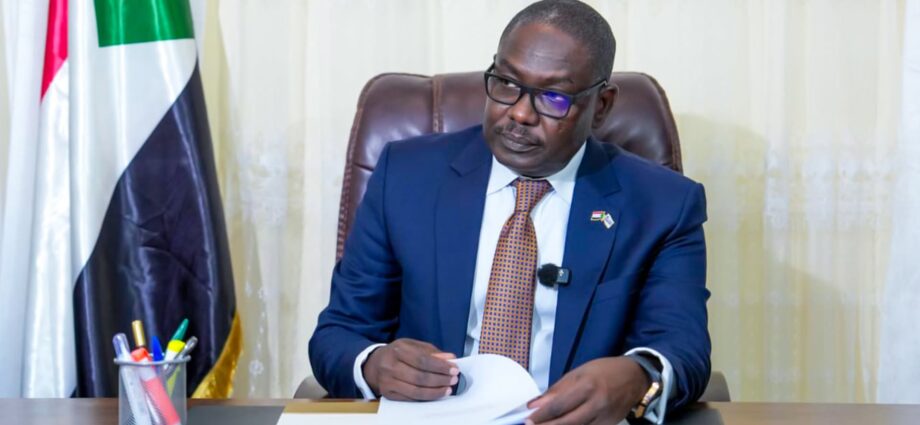
The Prime Minister of the Sudan Founding Alliance (TASIS), Mohamed Hassan Osman al-Ta’aishi, has warned of a worsening food crisis in Sudan, calling on the United Nations to take urgent, coordinated action to address declining agricultural production, drought risks and growing humanitarian needs.
In a letter to UN Secretary-General António Guterres, al-Ta’aishi said declining rainfall and disrupted distribution, combined with the risk of agricultural drought and reduced crop and pasture production, threatened millions of Sudanese who depend on rain-fed farming and livestock grazing for food and income.
His warning comes amid worsening food security indicators in the Kordofan region. The Kordofan Observatory said it had received testimonies from residents of Al-Nuhud, Wad Banda, Al-Khuwai and Al-Mujlad reporting that some families had been forced to eat ambaz — the residue left after pressing peanuts, normally used as animal feed — because of rising food prices and declining purchasing power.
Al-Ta’aishi said more than three years of war had reduced agricultural production, disrupted markets and supply chains and driven up the prices of food and agricultural inputs. Millions of people have also been displaced and lost their livelihoods, while humanitarian access remains restricted, he said.
According to the letter, about 19.5 million people in Sudan are expected to face high levels of acute food insecurity in 2026, with the risk of famine persisting in the most vulnerable areas and the crisis potentially extending beyond the harvest season into early 2027.
Al-Ta’aishi called on the UN and its specialized agencies, in coordination with the African Union, IGAD and international partners, to conduct an urgent nationwide assessment of rainfall, cultivated land, production forecasts and food security, including in hard-to-reach areas.
He also called for a UN proactive action plan and emergency funding to support agriculture and livestock production and to pre-position food, medicine and therapeutic nutrition supplies in the most vulnerable areas before the rainy season or further fighting cuts off roads and disrupts aid deliveries.
The prime minister urged the expansion of operations by the World Food Programme, the Food and Agriculture Organization, the World Health Organization and UNICEF, and called for the use of all available humanitarian access routes, including cross-border and cross-line operations, to ensure aid reaches civilians without political interference.
He further proposed establishing a UN technical mechanism to provide early warning and continuous monitoring of rainfall, agricultural production, markets, nutrition and disease outbreaks. He urged donors to provide flexible, multi-year funding to support a shift from emergency response towards prevention, recovery and strengthening local production.
Meanwhile, the Kordofan Observatory said fighting had disrupted trade and humanitarian assistance and prevented some farmers from accessing their land.
It called on the warring parties to open and secure trade and humanitarian corridors and refrain from using food and aid as tools of pressure against civilians. It also urged authorities in Khartoum and the Northern State to allow commercial goods to reach Kordofan, and called on the Rapid Support Forces to facilitate trade and remove checkpoints and other obstacles that contribute to rising commodity prices.
Al-Ta’aishi warned that delays in international action could lead to a preventable humanitarian and food catastrophe, stressing his government’s readiness to cooperate with the UN and its agencies and facilitate humanitarian access and field assessments in affected areas.