Khartoum, August 26 (Darfur24)
Youth, civil and independent bodies, organizations, initiatives and groups on Tuesday announced their support for the outcomes of a consultative meeting of anti-war forces held in Addis Ababa on August 22 and 23, while rejecting Sudanese army commander Abdel Fattah al-Burhan’s call for a Sudanese-Sudanese dialogue in its current form.
In a joint statement, the signatories said Burhan’s initiative did not provide the necessary conditions for a comprehensive peace process and could not serve as a pathway to ending the war if it remained under the control of one party to the conflict or sought to consolidate de facto authority and grant it political legitimacy.
The groups expressed support for the document, “The Common Position – The Peace Process We Want,” issued at the Addis Ababa meeting, which outlines a peace process linking humanitarian action, the cessation of hostilities, a ceasefire and a civilian-led political process.
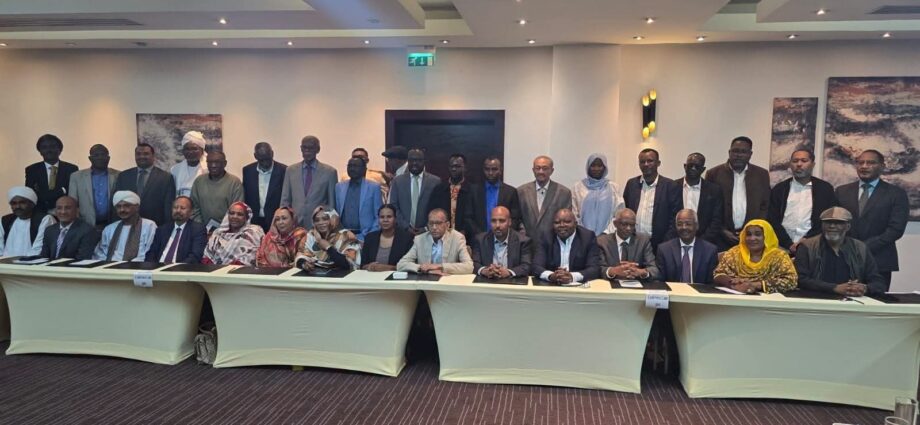
The consultative meeting brought together political and civil forces, civil society organizations, women’s and youth networks and public figures. It concluded with a joint position proposing a three-track peace process covering humanitarian issues, a ceasefire and the political transition.
The signatories said any Sudanese-Sudanese dialogue must be inclusive and independent, with the participation of civil, political and community forces, as well as women, young people, displaced persons and refugees.
They said the participation of the warring parties should be limited to negotiations concerning a ceasefire and humanitarian issues.
The statement also called for stronger protection of civilians, an end to the humanitarian catastrophe, the restoration of civic space and fundamental freedoms, and progress towards a democratic civilian transition.
It stressed Sudan’s unity and rejected efforts to turn areas controlled by military forces during the war into a permanent political reality.
The signatories further called for the exclusion of the National Congress Party, the Islamic Movement and their political and military fronts from the political process, citing their role in undermining the democratic transition and contributing to the outbreak of the war. They said the move should not be viewed as political exclusion.
The statement also demanded meaningful participation by young people, women, victims, displaced people and refugees in the peace process and decision-making, including on issues of safe return, the restoration of rights and property, reparations and justice.
The 36 signatory groups and individuals said they would continue coordinating and working jointly to end the war through peaceful and negotiated means, protect civilians, support an independent and inclusive peace process, defend Sudan’s unity and advance a democratic civilian transition in line with the values of the December Revolution.