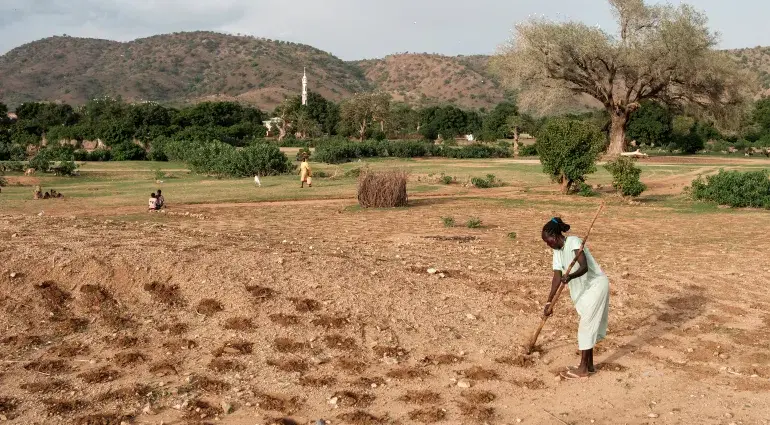
Kauda, August 25 (Darfur24)
Escalating fighting in the Kauda and Heiban areas of South Kordofan State has disrupted the agricultural season and prevented farmers from cultivating large areas, raising fears of worsening food insecurity and possible famine, local sources said.
The conflict has triggered displacement and forced migration, while agricultural equipment, fuel, spare parts and seeds have also been looted.
Kauda and Heiban have experienced growing tensions since May, initially sparked by disputes over border demarcation between tribes before escalating into clashes between the Sudan People’s Liberation Movement-North (SPLM-N) and members of the Otoro tribe, whom the movement describes as “rebels.”
Sources in Kauda told Darfur24 on Monday that intensified fighting during May and June, combined with displacement, forced many residents to abandon their land, including farmers who had already begun planting and others who were preparing their fields.
Thousands of acres in the agricultural areas of Khor Al-Jamous, Al-Qardoud, Al-Azraq and Eri have not been cultivated this season because they lie in areas affected by the fighting, the sources said.
They warned that the failure to cultivate the land could trigger a major famine in the Heiban area, where conditions are already approaching famine.
During May and June, SPLA forces launched attacks on areas controlled by the Otoro, while armed groups from the tribe carried out counterattacks against SPLA positions. The tribal fighters later took control of areas in and around Kauda.
Both sides accused each other of killing civilians, burning homes and looting property.
Clashes intensified inside Kauda in July and August, with both sides carrying out attacks on military positions and residential areas. The fighting displaced large numbers of residents, disrupted basic services, led to the looting of some humanitarian organizations’ premises and the burning of homes.
The SPLM-N denies that the conflict is tribal in nature, saying its operations target armed groups it describes as “rebels.”