Nyala, August 14 (Darfur24)
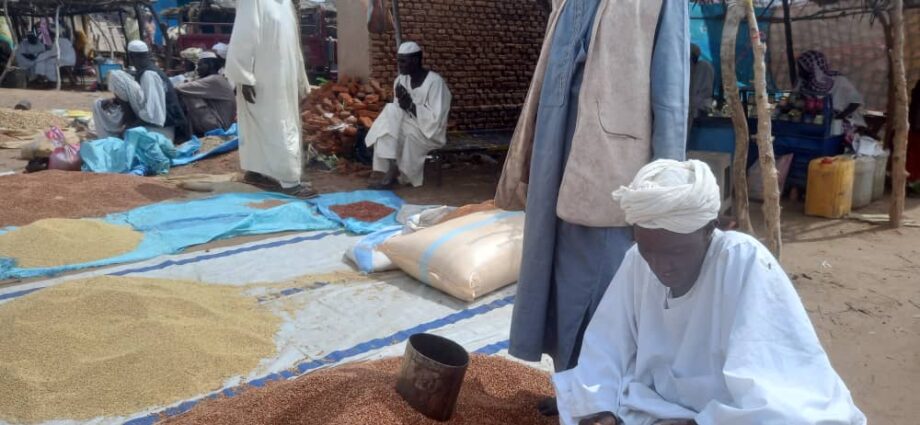
Millet and sorghum prices have surged across several cities, towns and villages in Darfur and Kordofan, with supplies disappearing from some markets and raising fears that the worsening food crisis could develop into famine.
Civil administrations affiliated with the Sudan Founding Alliance government in South and East Darfur, as well as the civil administration in Kutum, North Darfur, have restricted the movement of millet and sorghum outside their respective areas as demand rises and supplies decline.
A resident of Um Kadada, southeast of El Fasher, told Darfur24 that the price of a sack of millet rose from 450,000 to 600,000 Sudanese pounds, while the commodity is scarce.
The resident attributed the shortages to fighting in Kordofan, the closure of the Ad-Dabba road in Northern State and restrictions affecting goods entering through the Libya border triangle. He warned that continued shortages could trigger a famine that would be difficult to contain.
He also reported signs of reverse displacement toward major cities, including Nyala, El Daein and El Geneina, amid poor rains and delays to the agricultural season, and called for urgent humanitarian intervention.
In Hamra al-Sheikh, North Kordofan, residents said restrictions on transporting millet and sorghum had also affected local supplies. The town depends heavily on agricultural produce from Darfur because of its desert environment and the large number of pastoralists who rely on the two crops.
Khader Mustafa Osman, a Kordofan resident, told Darfur24 that the price of a sack of millet had risen from about 400,000 pounds to more than 700,000 pounds in Um Badr, Hamra al-Sheikh, Abu Zaima and Sudri.
He said restrictions on transporting crops from Darfur had encouraged traders to withhold supplies and raise prices, while humanitarian assistance and support for community kitchens have declined.
Residents of Al-Sayyah and Al-Malha, northeast of El Fasher, also reported shortages and price increases. A crop trader in Al-Malha said a sack of millet or sorghum had reached 600,000 pounds, while a quarter-sack was selling for about 30,000 pounds.
In South Darfur, civil administration head Salah al-Din Ahmed Ismail issued a decision on Thursday banning the movement of millet and sorghum outside the state. Violators face prosecution, up to one year in prison, a fine of 4 million Sudanese pounds, confiscation of vehicles used in transporting the crops, or a combination of these penalties.
The civil administration in Kutum also banned the removal of millet and sorghum from the locality and warned that violators would face legal action, although it did not specify penalties.
The restrictions come amid growing concerns over food availability, as conflict, disrupted trade routes, poor rainfall and declining humanitarian assistance continue to put pressure on food supplies across Darfur and Kordofan.