Nairobi, August 11 (Darfur24)
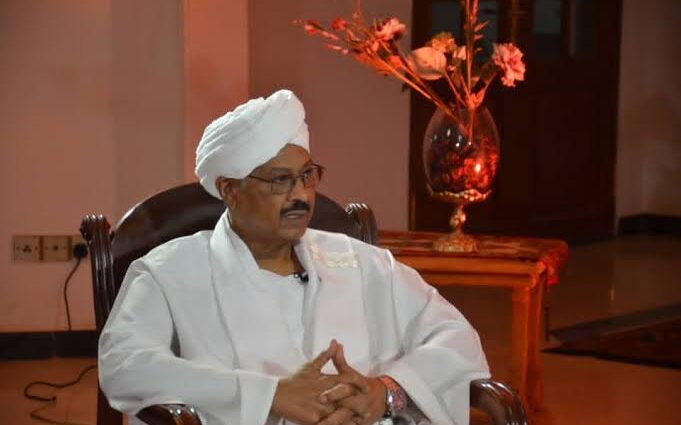
Umma Party leader Mubarak Al-Fadil Al-Mahdi said the National Congress Party, led by Ahmed Haroun, and the Islamic Movement, led by Ali Karti, should be included in any internal Sudanese political dialogue, arguing that the movement remains a key political force behind the current government.
Al-Fadil was commenting on reports that the Sudanese army leadership was considering an internal political dialogue involving Sudanese forces inside the country while excluding the National Congress Party and the Founding Alliance led by Rapid Support Forces (RSF) commander Mohamed Hamdan Dagalo.
In a post on X, Al-Fadil described the Islamic Movement and the National Congress Party as political and military allies of Sovereignty Council Chairman and army commander Abdel Fattah Al-Burhan. He accused Islamists of regaining influence over state institutions and operating behind the scenes because of domestic and international opposition and sanctions imposed on some of their leaders.
He said the Islamic Movement’s Shura Council held a conference in Atbara on November 14, 2024, during which former President Omar Al-Bashir addressed participants from prison. According to Al-Fadil, the conference elected Ali Karti as the movement’s secretary-general, succeeding the late Zubair Mohamed Al-Hassan, and endorsed Ahmed Haroun as president of the National Congress Party despite the party’s legal ban.
Al-Fadil also accused the Islamic Movement of forming and arming allied militias, including Al-Baraaoun, Al-Nabaa Al-Yaqeen and Al-Waad Al-Sadiq. He said complaints had emerged from parts of Al-Jazirah and Sennar states concerning restrictions on weapons supplied to mobilized fighters who were not affiliated with Islamist groups.
He further attributed the continuation of the war and the rejection of ceasefire initiatives, including the Jeddah and Manama processes, to the influence of Islamist figures.
Al-Fadil warned that launching political dialogue while the war continues and the humanitarian situation deteriorates could become an attempt to impose a political fait accompli before reaching a settlement capable of ending the conflict.
Army chief Abdel Fattah Al-Burhan has called for an end to the war and warned of its consequences for Sudan’s unity and civilian safety. He has also called for a comprehensive Sudanese dialogue involving political and societal forces, provided that the process meets conditions of neutrality and security.