Nyala, June 08 (Darfur24)
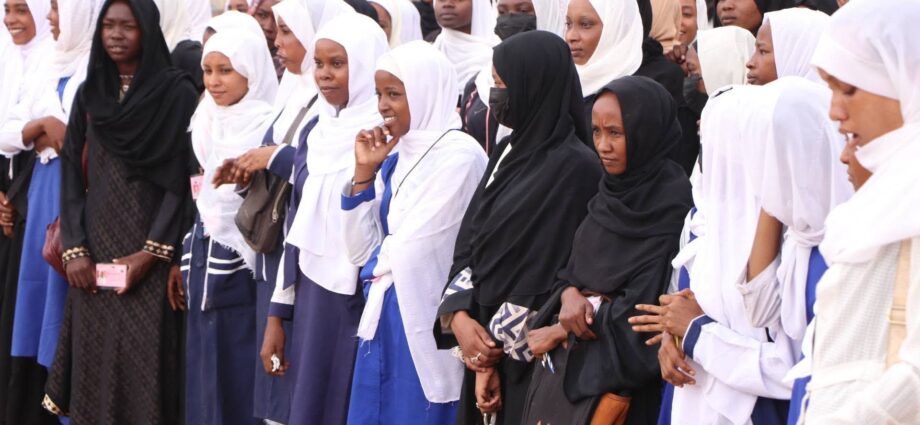
Thousands of students across Darfur sat for Sudanese Certificate examinations on Sunday under arrangements made by the government of the Founding Alliance, offering many families their first opportunity in three years to access the examinations despite continuing uncertainty over recognition of the results.
The exams mark an unprecedented moment in Sudan’s history, with two rival administrations now conducting separate Sudanese Certificate examinations amid the country’s ongoing conflict.
The move comes after students in Darfur were excluded from three examination cycles organized by the military-backed government since the outbreak of war. Those exams were held in central, eastern, and southern Sudan, as well as in North and South Kordofan and neighboring countries, leaving thousands of Darfur students unable to participate.
In Nyala, the bell signaling the start of the examinations was rung by Mohamed Hamdan Dagalo “Hemedti,” President of the Presidential Council of the Government of National Accord and commander of the Rapid Support Forces. He later toured several examination centers in the city alongside local officials.
For many families, the examinations represent a rare opportunity to restore a sense of normalcy after years of disruption.
Mohammed Ahmed Al-Daw, a parent in Nyala, told Darfur24 that the exams offered students a chance to recover from three years of interrupted education.
He said he had been unable to afford the cost of sending two of his sons to sit examinations in army-controlled areas during previous years.
Although his children were finally able to take the exams this year, Al-Daw said many parents remain concerned about whether the certificates will be recognized and whether successful candidates will be admitted to Sudanese universities.
“Like many families in Darfur, we are hopeful that the parties to the conflict will reach an understanding that protects the future of our children,” he said.
According to officials, approximately 10,000 students are sitting the examinations in areas controlled by the Government of National Accord. The exams will continue for 15 days across 84 centers distributed among the capitals and localities of eight states. Authorities have also established emergency centers for students arriving from central Sudan.
The opening day in Nyala, the administrative headquarters of the Founding Alliance government, was marked by heightened security measures and the deployment of federal police vehicles around examination centers. Despite ongoing uncertainty, many students expressed optimism about continuing their education.
Senior officials from the Government of National Accord—formed by the Rapid Support Forces, the Sudan People’s Liberation Movement-North led by Abdel Aziz al-Hilu, and other allied armed groups—also participated in ceremonies launching the examinations in several cities across Darfur.
Prime Minister Mohamed Hassan Al-Ta’aishi described the examinations as part of the government’s commitment to safeguarding citizens’ rights and ensuring educational opportunities for students in areas under its control.
Speaking during a ceremony in El Geneina, Al-Ta’aishi said the exams represented a turning point for regions that have long experienced educational marginalization. He noted that thousands of students had been deprived of educational opportunities during the past three years, while areas such as the Nuba Mountains and Blue Nile had faced similar challenges for decades.
He also announced plans for a comprehensive education conference to address issues including curricula, education policy, and the future of Sudan’s educational institutions. According to Al-Ta’aishi, the government intends to rehabilitate universities and ensure that successful students gain access to higher education opportunities both inside Sudan and abroad.
The examinations have sparked widespread debate because they represent the first time in Sudan’s history that two separate governments have organized competing Sudanese Certificate examinations.
Observers warn that the development could deepen political and institutional divisions in a country already fractured by nearly four years of conflict between the Sudanese army and the Rapid Support Forces, even as many families view the exams as a vital opportunity to preserve their children’s educational future.