Jebel Marra/Nyala, November 25 (Darfur24)
Pregnant women and children in parts of Sudan’s Darfur region are facing growing health risks as shortages of medical services, poor roads, insecurity, and disease outbreaks leave communities struggling to access essential healthcare.
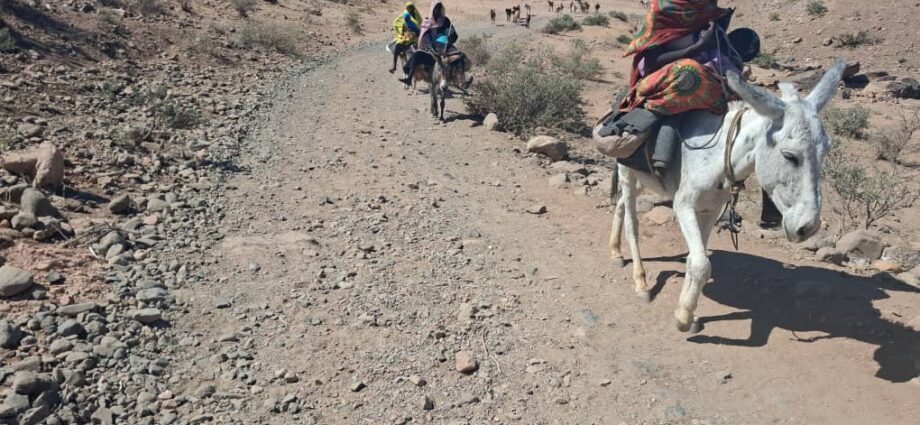
In Jebel Marra, spanning Central and North Darfur states, pregnant women travel for hours on animal backs to reach health facilities, while residents of Kaldi town in South Darfur report outbreaks of malaria and watery diarrhoea, particularly among children and pregnant women.
Khadija Abdel-Mawla, who is five months pregnant, told Darfur24 that she travelled about 30 kilometres from Sinqo village to Kator Health Centre in East Jebel Marra, spending between four and five hours on an animal to receive medical and nutritional care.
She said women in northern Jebel Marra sometimes travel more than 50 kilometres to reach Kona Health Centre.
Mariam Moussa, a seven-month pregnant woman from Dali village, said she spent eight hours travelling to Kator Health Centre to seek medical attention for her child, who suffers from malnutrition.
She complained about poor services and overcrowding, saying she had to remain at the facility for a second day. She also reported that several women experienced bleeding while waiting for medical assistance.
A health source told Darfur24 that poor roads, inadequate medical facilities and transportation difficulties prevent hundreds of pregnant women in Jebel Marra from accessing healthcare.
The shortage of qualified medical personnel, particularly in remote mountain villages, has forced some women to rely on traditional birth attendants and deliver at home.
The source warned that home births without adequate medical supervision, health awareness, and sterilised equipment expose mothers and newborns to serious risks. Some families also delay transporting sick women to medical facilities until their conditions deteriorate, with cases of complicated deliveries reported along the way to hospitals.
A health source from Médecins Sans Frontières (Doctors Without Borders) told Darfur24 that women in Jebel Marra face overlapping risks during pregnancy and childbirth because of poverty, hunger, difficult terrain and inadequate antenatal care.
Meanwhile, residents of Kaldi town in South Darfur’s Al-Salam locality reported deteriorating health conditions, with malaria and watery diarrhoea spreading particularly among children and pregnant women.
Adam Abdelkarim, a resident, told Darfur24 that the town suffers from a severe shortage of healthcare services and medical personnel.
He said the town has only one health centre, built through community efforts using locally available materials, which serves thousands of residents but opens only on Thursdays, coinciding with the weekly market.
Residents said attempts by humanitarian organisations to reach the area had been hampered by insecurity. They cited armed groups involved in looting passenger vehicles as a major concern and called on local authorities to improve healthcare services and strengthen security.
Healthcare services across several towns in South Darfur have deteriorated since the outbreak of war between the Sudanese army and the Rapid Support Forces (RSF), with most hospitals and health centres closing. Some facilities have since resumed operations with support from humanitarian organisations.