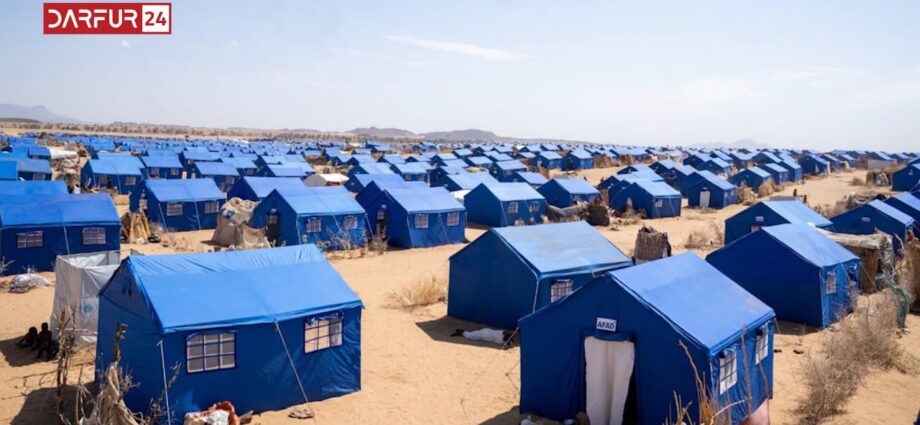
North Darfur, August 22 (Darfur24)
Rising food prices and new fees on traders are worsening the humanitarian situation in Tawila and Al-Malha, North Darfur, although local volunteers have denied reports that families are fleeing Al-Malha because of food shortages.
In Tawila, traders said the humanitarian affairs department of the civilian authority affiliated with the Sudan Liberation Movement (SLM), led by Abdul Wahid Mohamed Nur, had imposed new fees of 2,000 Sudanese pounds for each displaced family served through World Food Programme-supported distribution centres.
Traders told Darfur24 that the additional charges had increased their costs, forcing some to sell food to displaced people at prices above market rates.
A trader said suppliers had already paid the required fees and submitted official bids before being asked to pay the additional charge.
The WFP introduced a voucher system in Tawila and eastern Jebel Marra, allowing displaced people to redeem food assistance through approved traders. However, displaced people complained that food prices remained high. A woman at Dabba Nayra camp said families had bought food from distribution centres at double local market prices for the second consecutive month.
A military leader within the SLM told Darfur24 that some members of the movement opposed the civilian authority’s actions and confirmed that new fees had been imposed on traders. He also said vehicle owners working with humanitarian organisations were required to pay annual certification fees of 500,000 Sudanese pounds.
Meanwhile, volunteers in Al-Malha denied reports that families had fled the locality because of worsening food insecurity.
The Al-Malha Local Emergency Rooms Coordination Council said it had not recorded any displacement to neighbouring areas despite a sharp rise in the prices of basic commodities.
It said a sack of millet had reached 500,000 Sudanese pounds, while sugar was selling for 400,000 pounds per sack and flour for 200,000 pounds.
Residents had previously told Darfur24 that dozens of families were leaving Al-Malha because of food shortages, high prices, the loss of income and the closure of major trade routes. However, the Emergency Rooms Coordination Council and the Al-Tafa’ul Charitable Organization for Aid and Development said their monitoring had found no evidence of displacement.
Trade in Al-Malha has been severely affected since the Rapid Support Forces took control of the town in March 2025. The situation worsened after the closure of the border triangle crossing with Libya and restrictions imposed by Northern State authorities on commercial trucks transporting goods to areas controlled by the RSF.
Al-Malha, an important commercial hub linking North Darfur with Northern State and the Libyan border, relies heavily on these trade routes to supply its markets.