Khartoum, July 16 (Darfur24)
The UN High Commissioner for Human Rights warned on Wednesday that Sudan’s war economy has become a key driver of the conflict, saying the exploitation of natural resources and trade routes, particularly the gum arabic trade, is helping finance military operations and exposing global supply chains to serious human rights risks.
In a new report, the Office of the High Commissioner called on the parties to the conflict, as well as governments and companies involved in Sudan’s gum arabic trade, to comply with international law and ensure the trade does not finance the war or contribute to human rights abuses.
The report said the rising cost of the conflict has pushed both sides to rely increasingly on controlling territory, trade routes and commercial goods to generate revenue, creating what it described as a “self-sustaining war economy.”
UN High Commissioner for Human Rights Volker Türk said Sudan’s natural resources should benefit its people but are instead being used to fuel the conflict and worsen civilian suffering.
“The war economy must be disrupted, and the international community must pay closer attention to the goods and trade routes that enable it to continue,” Türk said.
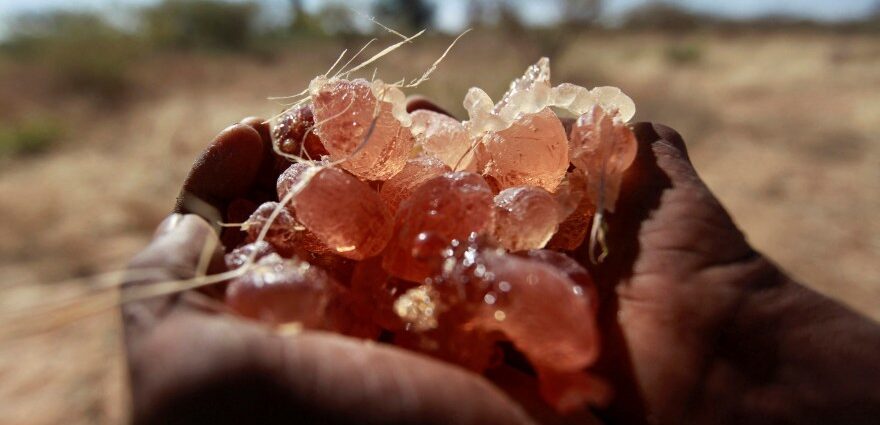
The report uses the gum arabic sector as an example of how the war economy affects human rights. It notes that the commodity, widely used in the food, beverage, cosmetics, and pharmaceutical industries, remains a vital source of income for millions of Sudanese, despite the severe disruption caused by the conflict.
According to the report, workers in the sector have faced threats, arbitrary detention, looting and extortion by parties to the conflict, while production and marketing networks have been severely disrupted.
The report said Rapid Support Forces fighters looted the gum arabic exchange and warehouses in Al-Nuhud, West Kordofan, in May 2025, along with parts of the main market, disrupting exports and harming local livelihoods.
It added that the war has reshaped gum arabic trade routes. Supplies from army-held areas continue to move through Port Sudan for export. In contrast, large quantities from RSF-controlled areas are smuggled through neighboring countries before being re-exported, making it harder to verify their origin.
The report warned that Sudanese gum arabic may enter international markets as a product of transit countries, and called for stronger origin-tracing systems and greater monitoring of supply chains.
The Office urged governments and companies trading Sudanese products to strengthen due diligence, verify product origins, scrutinize transport routes and intermediaries, and establish effective mechanisms for people affected by human rights abuses to seek redress.