Kampala, May 01 (Darfur24)
The National Emergency Initiative to Support Sudanese Certificate Examinations has accused Sudanese military authorities of depriving more than 280,000 students of the opportunity to sit for secondary school certificate exams, after rejecting proposals to organize unified nationwide examinations.
The latest exam session, conducted in areas under army control, concluded days ago. However, students in Darfur, Kordofan, and Blue Nile—regions largely outside government control—were unable to participate.
In a report obtained by Darfur24, the initiative detailed three months of efforts to coordinate a unified exam process across conflict lines. It stated that repeated proposals, including flexible technical arrangements tailored to wartime conditions, were met with “rejection and silence” from the authorities in Port Sudan.
The initiative emphasized that its proposals were not rejected for technical reasons but due to a lack of political will.
In contrast, it noted that authorities in areas controlled by the “Establishment” alliance showed initial willingness to engage, holding meetings and expressing readiness to coordinate parallel exams, contingent on agreement with the other side.
The Sudan Liberation Movement/Army also expressed full support for the initiative’s proposals, particularly given the dire conditions faced by displaced students in areas under its control.
According to the report, the initiative’s vision extends beyond exam logistics, framing the Sudanese certificate as a unifying national institution that should remain accessible to all students regardless of geography or control lines.
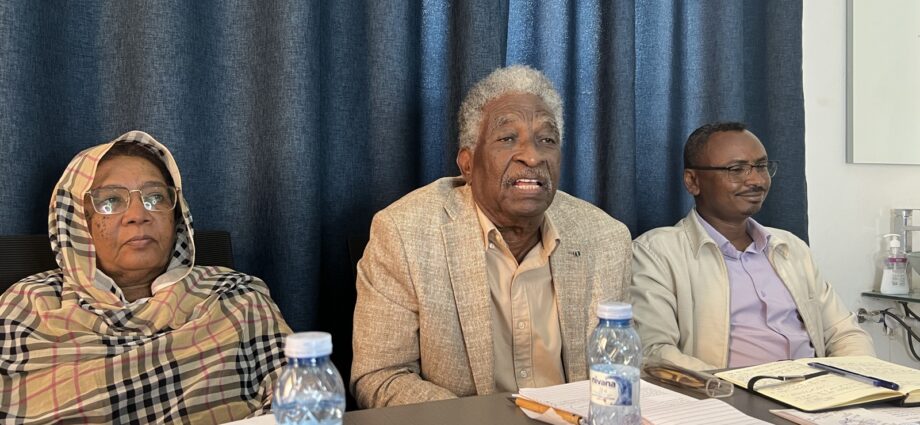
Speaking at a press conference in Kampala, initiative member Shams al-Din Daw al-Bayt said that 280,000 students—60 percent of them girls in Darfur and Kordofan—have been unable to sit for exams since 2023.
He warned that continued exclusion risks pushing young people out of the education system entirely, leaving them vulnerable to recruitment by armed groups or forced into informal and hazardous work such as mining.
Daw al-Bayt stressed that the initiative is purely humanitarian and aims to protect education as a basic right, calling for a consensus similar to past national agreements to enable all students to sit for exams.
For her part, initiative member Madiha Abdullah said the denial of exams threatens not only individual futures but also national cohesion.
“This is not just about education—it is about the unity of Sudan,” she said, arguing that the rejection of the initiative reflects broader risks of fragmentation.
She added that the initiative will push to place education at the center of peace efforts, including calls for a humanitarian truce to allow safe and inclusive examinations under international and local supervision.
The initiative urged regional and international actors to intervene at a higher level to prioritize education, warning that continued disruption could deepen divisions and undermine the country’s future.
It also announced plans to document its engagements with all parties and to continue advocating for education to be treated as a core humanitarian priority in any political settlement.