Nairobi, April 10 (Darfur24)
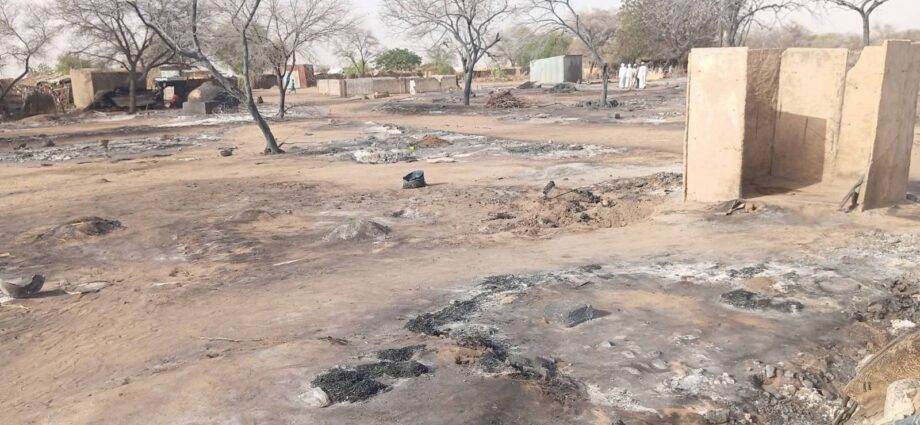
Fires that broke out in several towns across Darfur have caused widespread destruction, displacing hundreds of families and destroying homes, crops, and property, according to emergency rooms, residents, and humanitarian data.
In Mukjar town in Central Darfur State, the local emergency room reported that a fire erupted in the eastern neighborhood, burning down homes and leaving families without shelter. Initial assessments indicated that at least 13 houses made of local materials were destroyed, along with stored crops, household belongings, and personal savings.
Meanwhile, in Qureida town in South Darfur State, residents said fires broke out in multiple locations, causing extensive damage. In Donkey White camp, six homes were destroyed, while a larger blaze in Babnusa camp consumed dozens of shelters.
Local fire committee member Issa Abkar Issa told Darfur24 that the fires in Babnusa camp destroyed 12 houses completely and damaged dozens more, leaving residents without shelter or possessions. He called for urgent intervention by authorities and humanitarian organizations to provide emergency assistance, including tents and tarpaulins.
According to the International Organization for Migration’s Displacement Tracking Matrix, the fires in Babnusa camp displaced at least 141 families, with 87 shelters destroyed and 54 partially damaged. Affected families were forced to flee to open areas within the locality.
Residents say the situation is worsening due to repeated fire incidents. Daoud Adam Daoud, one of those affected in Qureida, said the town has faced recurring fires over the past three years without effective solutions, leaving communities increasingly vulnerable.
In a separate incident, a large fire in Umm Dafuq town in South Darfur destroyed at least 32 homes and killed dozens of livestock. Residents reported that strong winds accelerated the spread of the flames, while a lack of water and firefighting equipment hampered efforts to contain the blaze.
Observers note that fires tend to increase during the summer season in Darfur, where fragile housing structures and limited emergency response capacity heighten the risks. The ongoing conflict has further weakened basic services, including firefighting infrastructure, exacerbating the impact of such disasters on already vulnerable communities.