New York, April 5, 2025(Darfur 24)
The United Nations has voiced concern over reports of civilian displacement from the Sudanese capital, Khartoum, due to violence and fears of extrajudicial killings.
The army recaptured all of Khartoum and Khartoum Bahri from the Rapid Support Force( RSF) in late March.
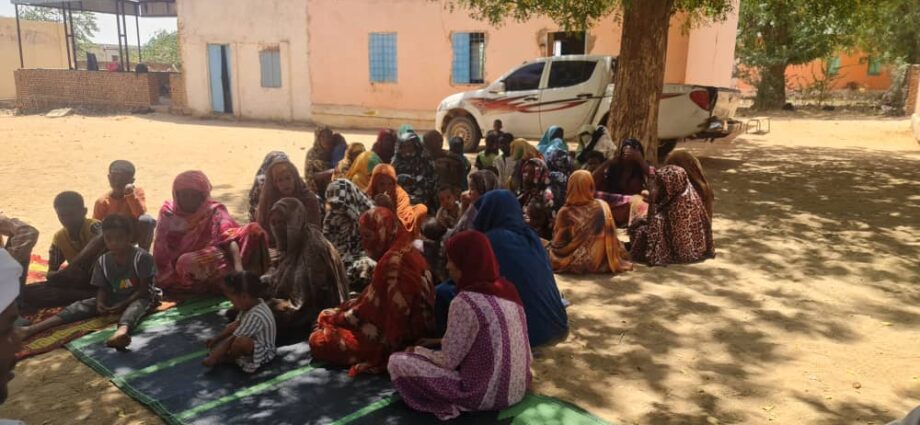
UN Spokesperson Stéphane Dujarric explained that humanitarian workers reported the arrival of approximately 5,000 displaced persons, most of them from Khartoum, to the Jabrat al-Sheikh area in North Kordofan State over the past week.
He noted that humanitarian partners report that these families are in dire need of food, clean water, shelter, and adequate healthcare. He stressed that there are reports of other people being displaced from Khartoum and other areas towards Umm Dukhun in Central Darfur.
Ongoing financial constraints have led to the reduction of some data collection activities, causing delays in reporting new displacements and issuing early warning alerts.
Dujarric emphasized that these recent movements are part of a broader trend of conflict-related displacement affecting multiple areas in Sudan, including Blue Nile and South Kordofan.
A Complex and Difficult Situation
The spokesperson noted that the overall situation in Sudan remains complex and difficult, with civilians fleeing for safety in some locations and attempting to return home in others, often to areas where basic services have been destroyed by the conflict and facing the danger of unexploded ordnance and explosive remnants of war.
Dujarric explained that the United Nations Office for the Coordination of Humanitarian Affairs (OCHA) is working to reach the population in Kadugli, the capital of South Kordofan, by facilitating the dispatch of a humanitarian aid convoy carrying nutrition, health, and water supplies. However, the convoy remains stalled in El Obeid, the capital of North Kordofan, due to insecurity and bureaucratic obstacles.
Dujarric said that UN Under-Secretary-General for Humanitarian Affairs Tom Fletcher expressed outrage at reports of escalating attacks on community kitchens and volunteer-run safe spaces in Sudan and stressed the need to protect and support humanitarian workers.
Dujarric reminded that international humanitarian law requires all parties to allow and facilitate rapid, unimpeded, and impartial humanitarian relief for civilians in need, regardless of their location or affiliation.
Unimaginable Level of Destruction
The International Organization for Migration’s (IOM) Chief of Mission in Sudan, Mohamed Refaat, said that the capital, Khartoum, is in a catastrophic state after two years of war.
Refaat made a four-day visit to the Sudanese capital and its suburbs.
He noted that he visited previously inaccessible areas and witnessed firsthand the scale of destruction and the suffering of the people there.
He addd, “I can tell you that power stations have been looted and water pipes have been destroyed. I’m not talking about specific areas, I’m talking about everywhere I’ve been. I’ve been to war zones in Libya, Yemen, and many other conflict zones.”
He continued, “The level of destruction I saw in Bahri and Khartoum is unimaginable. Not only were people’s homes, administrative areas, or military zones targeted, but all the basic infrastructure that can sustain people’s lives was targeted.”
Funding Needed
Rifaat highlighted the urgent need to provide humanitarian funding for medicine, shelter, drinking water, education, and healthcare, as well as ensuring unrestricted humanitarian access to those affected by the conflict. He warned that limited humanitarian access and a lack of funding have led to immense suffering, especially for women.
He noted that many NGOs have suspended or reduced their operations due to a lack of funding, and that Sudan is facing the largest displacement crisis in the world, with more than 11 million internally displaced people.
The IOM Chief of Mission called for a focus on reconstruction, noting that restoring Khartoum and other areas will take time, but that shelter and decent livelihoods can be provided once the necessary resources are available.
He noted that the IOM Sudan Response Plan seeks $250 million to assist 1.7 million people, but only 9% of the required funds have been covered by January 2025.
Rifaat explained that the return of people to Khartoum requires information to help them understand the situation on the ground and make informed decisions, in addition to massive investments to restore basic services such as health, water, and electricity.
He noted that there is a small sign of hope with the recent return of 400,000 internally displaced people to their homes, but most are returning to destroyed and looted homes that lack basic services.