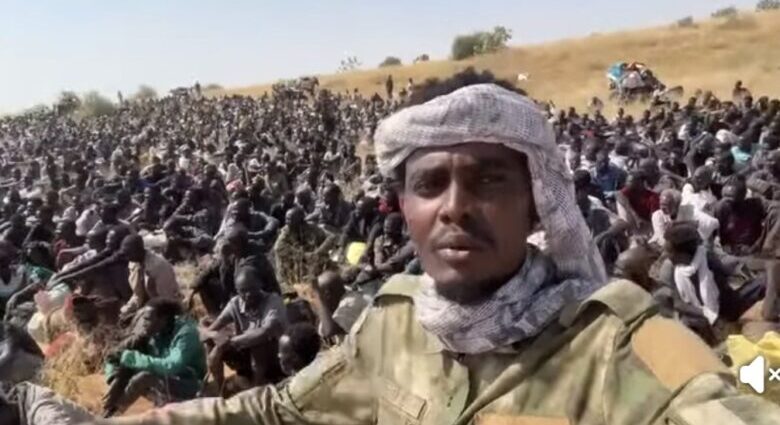
New York, October 28 (Darfur24)
United Nations officials have warned that the siege of cities in Sudan’s Kordofan and Blue Nile regions could lead to a new wave of atrocities, calling for stronger civilian protection measures and accountability to prevent a repeat of the violence witnessed in El Fasher last October.
The warnings were issued during an event at UN headquarters in New York marking the first anniversary of the Rapid Support Forces’ (RSF) attack on El Fasher, North Darfur’s capital.
Chaloka Beyani, the UN Special Adviser on the Prevention of Genocide, said in remarks delivered on his behalf that the atrocities in El Fasher had taken violence in Sudan to new levels.
Beyani called for support for efforts to secure an immediate ceasefire and urged the Sudanese Armed Forces and the RSF to withdraw their forces from cities and demobilise them to prevent further atrocities in Darfur, Kordofan and Blue Nile.
He also called for a comprehensive and credible peace process, warning that multiple parallel initiatives could be exploited by the warring parties to advance their own interests.
On accountability, Beyani urged a victim-centred approach and expanded judicial mechanisms, including consideration of a special or hybrid court, or exceptional judicial chambers. He also stressed the need for transitional justice and reparations for victims.
Investigators warn of possible genocide
Mohamed Chande Othman, head of the Independent International Fact-Finding Mission on Sudan, said the mission’s investigations had identified patterns of conduct bearing the hallmarks of genocide in El Fasher and surrounding areas.
He described the violations documented by the mission as among the largest and most serious incidents since the war began.
Othman said the consequences of the attack continued to affect civilians, with many people still displaced and families searching for relatives who disappeared during the violence. Accountability for most of the serious violations remained absent, he added.
He cited developments in El Obeid as an example of the importance of early warning in preventing attacks, saying attention from Human Rights Council members, the United Nations and other bodies had helped bring the risks facing the city to the forefront before a large-scale attack occurred.
Protecting civilians requires more than documenting violations, Othman said, calling for sustained diplomatic engagement, accountability efforts, humanitarian access and action to address the factors fuelling the conflict.
Women’s group cites civilian toll
Nemat Ahmadai, head of the Darfur Women for Action organisation, estimated that about 15,000 people were killed in El Fasher in less than a month.
She also said Zamzam camp, which she estimated had hosted about 800,000 displaced people, was destroyed. Many of its residents had already survived earlier waves of violence in Darfur, she added.
Ahmadai said she had lost people close to her during the violence and that her family had been unable to find the bodies of some relatives.
She argued that the atrocities in El Fasher could have been prevented and criticised the international community for failing to protect civilians.
Responsibility for the continuation of the violence extended beyond Sudan’s warring parties to external actors supporting them, she said.
The remarks came amid continued concern over the risks facing civilians in conflict-affected areas, with UN officials stressing that early action, humanitarian access and credible accountability mechanisms are essential to preventing further atrocities.