Report, October 24 (Darfur24)
Poor rainfall and widespread crop failures are threatening the 2026 agricultural season in Darfur, raising fears of worsening food shortages and living conditions amid ongoing war, displacement, market instability and declining community resilience to climate shocks.
Shrinking pastures and water shortages are also placing pressure on livestock and intensifying tensions between farmers and herders, while mounting humanitarian challenges are hampering aid delivery to affected communities.
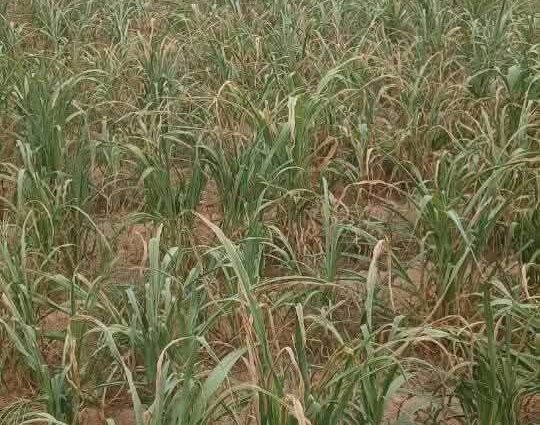
Farmers across Darfur told Darfur24 that prolonged dry spells had damaged large areas of crops and reduced cultivated land compared with previous years, warning of declining agricultural production and rising food prices in the coming months.
One farmer said the rainy season had begun promisingly before rainfall stopped for about 50 days, causing crops, including beans and maize, to wither. He said agricultural production in his area was nearly wiped out, and fodder had deteriorated.
He called for urgent intervention by the World Food Programme and other humanitarian organizations to provide assistance to affected communities.
In South Darfur, another farmer said he had cultivated land every year since 2012 but was unable to farm this season because of poor rainfall. He described the shortage of rain as unprecedented in nearly three decades.
He said cultivated areas had shrunk considerably as prices continued to rise, warning of a significant decline in agricultural production. Reduced grazing land had also forced herders closer to the remaining cultivated areas, increasing tensions with farmers amid insecurity and limited access to water.
The farmer added that a disease affecting cattle had raised concerns among herders, who had been unable to find an effective treatment.
Drought compounds the effects of war
Professor Saeed Yaqoub told Darfur24 that drought in Darfur was no longer a temporary climatic phenomenon but a growing source of pressure intersecting with conflict, displacement, weak markets and the vulnerability of communities dependent on rain-fed agriculture and livestock.
He cited major droughts in 1972, 1975 and 1984, saying the 2026 agricultural season was unfolding under more difficult conditions because of declining rainfall and the reduced capacity of authorities to respond to crises.
Yaqoub outlined four stages through which delayed rainfall can undermine agricultural production. These begin with a delay of 20 to 30 days in the start of the planting season, as reported in North Darfur and North Kordofan, followed by the failure of planted seeds to germinate.
A field survey in North Darfur found that 99 per cent of planted seeds had not received sufficient water to germinate, according to Yaqoub. He added that farmers in parts of East Darfur had been forced to sow their fields repeatedly.
He warned that complete crop failure would be particularly damaging, as families could be forced to consume seeds reserved for the following season. This would undermine both current food supplies and their ability to resume cultivation in the future.
Millet and sorghum were among the crops most affected, alongside sesame and groundnuts. Yaqoub also cited reports of widespread crop damage in several areas, including Abu Jubeiha, and said rising crop prices reflected the severity of the crisis.
He explained that families initially rely on their remaining food stocks when crops fail. Some may then consume or use seeds reserved for future planting, while the most affected households could be forced to sell livestock or leave their homes in search of food, water and livelihoods.
Livestock losses and rising tensions
The drought is also affecting livestock through higher temperatures, heat stress, increased evaporation and the early drying of pastures.
Yaqoub cited an official from the Emergency Rooms Coordination Council as reporting that more than 30 cows had died in one week in Yassin locality. He also referred to reports of hundreds of cattle deaths in the Jabal Issa area and villages in North Darfur.
Water and fodder shortages have reduced livestock fertility and milk production, he said, prompting herders to move their animals earlier than usual towards southern grazing areas.
The shrinking of pastures is also intensifying competition over land and water. Yaqoub cited incidents involving cattle entering dozens of farms along the Bali Valley in a town in North Darfur.
He said tensions had escalated to the point where some armed herders reportedly fired on farmers, as shrinking remote pastures and the concentration of cultivation near urban centers brought farming and grazing activities into closer proximity.
Yaqoub warned that drought and water shortages could also trigger displacement even without direct fighting. He cited displacement in Al-Daein, the capital of East Darfur, which he linked to fears of agricultural failure and food shortages.
He also pointed to population movements in North Darfur as declining pastureland and limited resources pushed agricultural activities towards areas closer to population centers.
War weakens communities’ resilience
According to Yaqoub, the war has left local communities less able to withstand drought than in previous years.
He referred to the University of Notre Dame’s index measuring countries’ vulnerability to climate change and their readiness to respond to its effects. According to figures he cited, Sudan ranked 184th out of 187 countries in preparedness in the 2026 update, while facing high climate risks and limited response capacity.
He warned that inadequate preparedness could turn climate shocks, including droughts and floods, into widespread humanitarian crises, particularly as fighting continues and government intervention remains limited.
Calls for urgent intervention
Yaqoub identified four priority areas for addressing the consequences of the failed agricultural season.
The first is the provision of emergency food assistance to areas at risk of hunger, particularly those that the Famine Early Warning Systems Network (FEWS NET) has warned could deteriorate to Phase 5, or famine. He cited estimates that between 22 million and 23 million people in Sudan need humanitarian assistance.
The second priority is expanding access to water through alternative supplies and urgently drilling new wells. Third, he called for drought-resistant and short-cycle seeds to be provided ahead of the next agricultural season, before households exhaust their remaining seed stocks.
The fourth priority is improving security around agricultural areas and reducing conflict between farmers and herders, which is being exacerbated by dwindling water supplies and grazing land.
Yaqoub concluded that the continuation of the war was worsening the effects of the climate crisis and undermining the ability of authorities and humanitarian organizations to respond.
He said ending the conflict was essential to creating the conditions needed to address the agricultural and humanitarian consequences, warning that continued fighting would obstruct efforts to contain the crisis.