Nairobi, June 26 (Darfur24)
The Rapid Support Forces (RSF) have begun refining crude oil in South Darfur after transporting it from oil fields under their control in neighboring East Darfur, according to multiple informed sources who spoke to Darfur24.
They stated that four refineries are currently producing gasoline using crude oil transported from fields in the Sufyan area of East Darfur, which is part of the oil-rich Block 6 concession.
Block 6 falls under the Petro Energy concession, a joint venture between the China National Petroleum Corporation (CNPC) and Sudan’s National Oil Corporation. Commercial production at the Sufyan field began in 2015 with an initial output of about 5,000 barrels per day.
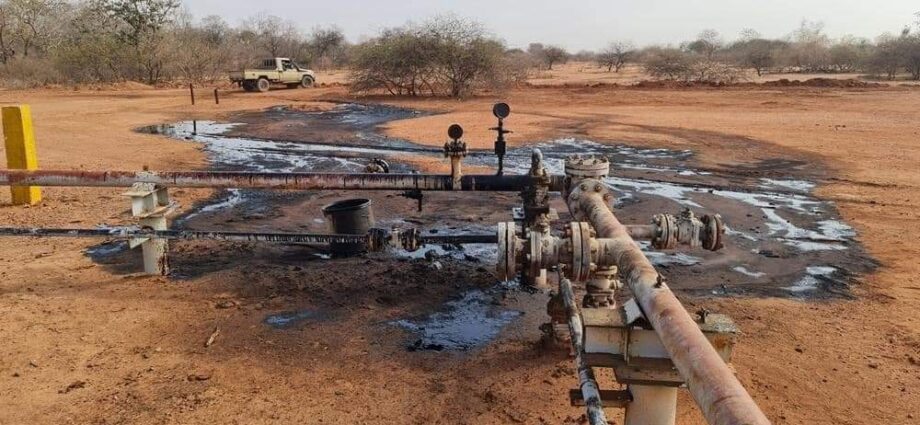
Oil operations across Block 6—which includes the Sufyan, Abu Jabara, Sharf, and Zarqa Umm Hadida fields—have been suspended since late 2023 because of the war between the Sudanese army and the RSF and the deteriorating security situation. Oil facilities across the block have also been subjected to extensive looting and sabotage.
In late 2025, CNPC, which holds a 95 percent stake in Block 6, requested to terminate its partnership and contractual agreements related to the concession, citing force majeure caused by the conflict and widespread damage to oil infrastructure.
According to sources who spoke to Darfur24, the refining operations are backed by senior RSF commanders, including Major General Abdul Rahman Jumaa Baraka Allah, the RSF commander in Central Darfur, whom the sources identified as the owner of one of the four refineries.
The sources also said the Ministry of Oil under the “Sudan’s Founding Alliance” government, established earlier this year, is seeking to formalize production by contracting refining companies. Prime Minister Mohamed Hassan al-Ta’aishi appointed al-Basha Tabik as oil minister in January last year.
However, a petroleum engineer questioned the feasibility of the reported refining operations, telling Darfur24 that crude oil cannot easily be refined in Darfur without pipelines linking production sites to refineries. Transporting crude by truck, the engineer said, could lead to solidification during transit and would also be economically impractical.
In a related development, residents told Darfur24 they observed foreign nationals—believed to be engineers—accompanied by armed personnel in the Badi area northeast of Al-Daein, near the oil fields, in October last year.
Last July, Darfur24 reported that RSF fighters had transported crude oil from the Sufyan field using fuel tankers, an operation that reportedly triggered disputes between forces stationed in the area and another RSF unit assigned to carry out the transport.
Earlier this month, two RSF members assigned to guard the Sharf oil field east of Al-Daein were killed during clashes with another RSF group involved in transporting crude oil, highlighting internal tensions over control of the resource.
Darfur24 was unable to obtain a comment from Minister al-Basha Tabik regarding the reported refining operations.
The RSF controls East Darfur State, which contains approximately 23 oil wells in the Sufyan, Sharf, and Al-Tarafiya fields, as well as the Zarqa Um Hadida field shared with West Kordofan. Together, these fields make up Block 6.
According to data from Sudan’s Ministry of Energy, the fields were producing at least 5,000 barrels of oil per day before the outbreak of war between the Sudanese army and the RSF in April 2023. Since then, the facilities have suffered extensive damage, looting, and destruction as the conflict has continued.