Geneva, June 03 (Darfur24)
The United Nations Population Fund (UNFPA) said on Tuesday that Sudanese women continue to shoulder the burden of the country’s ongoing conflict, striving to support their families despite insecurity, displacement, and the collapse of essential services.
Speaking from Cairo during a press briefing in Geneva, UNFPA Deputy Executive Director Andrew Saberton said his recent visit to Sudan revealed a country struggling to recover even as the war continues.
He described parts of Khartoum as a “ghost town” marked by destroyed buildings and widespread devastation, but noted that many residents are returning home despite the challenges.
“People do not want to remain in displacement camps indefinitely,” Saberton said.
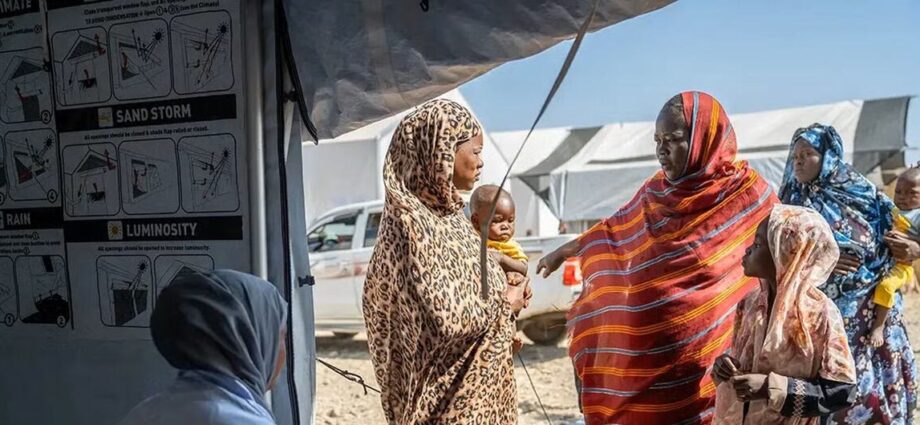
He also highlighted the difficult conditions facing Sudanese refugees in eastern Chad, where overcrowded camps and inadequate healthcare services continue to put women and children at risk. In one camp, he said, maternity wards were handling around 30 births a day under extremely poor sanitary conditions, often without access to anesthesia.
“No woman should have to give birth in such conditions,” he said.
Despite the severe strain on Sudan’s health sector, Saberton pointed to signs of recovery, including efforts supported by UNFPA to rehabilitate the Midwives Hospital in Khartoum. The facility is expected to become one of Africa’s largest maternity hospitals, capable of handling more than 50 births daily and providing services free of charge.
During visits to safe spaces in Port Sudan and Khartoum, Saberton said that women and girls described insecurity as a constant part of their daily lives. Nevertheless, he praised their resilience and determination to secure healthcare, education, and livelihoods for their families.
“I have witnessed how Sudanese women carry their country on their shoulders,” he said.
Saberton emphasized that a sustainable ceasefire and lasting peace remain crucial for Sudan’s recovery, noting that rebuilding the country will necessitate substantial investments in healthcare, protection services, and other civilian sectors.
He also warned that humanitarian assistance remains critically underfunded. According to UNFPA, protection programs have received only 20 percent of the funding required this year, while health services are funded at just 14 percent.
Without additional support, the agency may be forced to further scale back lifesaving services for women and girls across Sudan, he said.