Adré, February 05 (Darfur24)
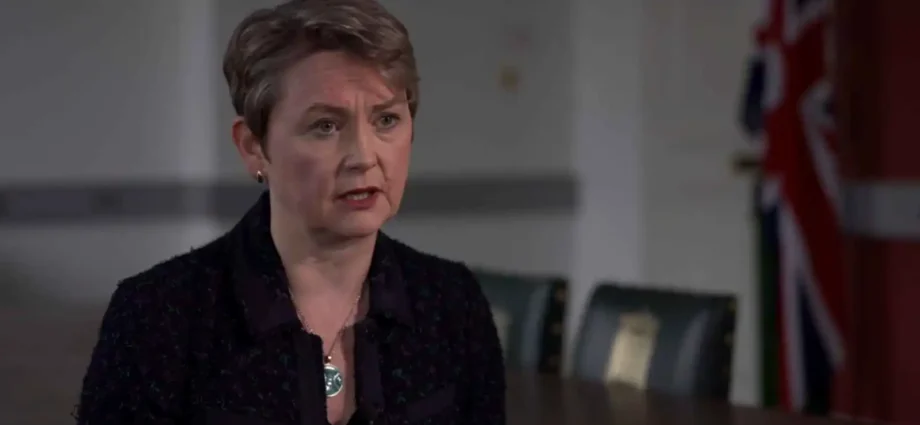
British Foreign Secretary Yvette Cooper on Tuesday criticized what she described as a “collective global failure” to protect women and girls in Sudan, citing widespread sexual violence during a war that has continued for more than 1,000 days.
Cooper made the remarks during a visit to the border city of Adré in eastern Chad, where she met Sudanese refugees and reviewed the worsening humanitarian situation. She called for urgent international action to secure a ceasefire and halt serious violations against civilians, particularly women and children.
During the visit, Cooper toured a hospital supported by the United Kingdom that provides treatment services to survivors of conflict-related sexual violence. She also met regional officials, including the foreign ministers of Chad, Kenya, and South Sudan, as well as the chairperson of the African Union Commission for Peace and Security, to discuss coordination of regional and international efforts, including engagement through the US-led Quartet, aimed at achieving an immediate ceasefire in Sudan.
In a statement, Cooper said Sudan is facing what she described as the world’s largest humanitarian crisis, marked by famine risks, collapsing infrastructure, and the displacement of more than 12 million people. She said women and girls are disproportionately affected by the conflict, reporting high levels of sexual violence, abduction, and exploitation.
The British foreign secretary announced £20 million in new UK funding to support survivors of conflict-related sexual violence in Sudan. The funding will cover medical and psychological care, service improvements, community programs addressing stigma faced by survivors and children born as a result of abuse, and longer-term prevention efforts.
Cooper said the international community has failed Sudanese women, warning that sexual violence is being used as a weapon in the conflict. She added that the continuation of the war threatens not only regional stability but also broader international security and migration dynamics, making the crisis a shared global responsibility.