Abu Jubaiha, January 22 (Darfur24)
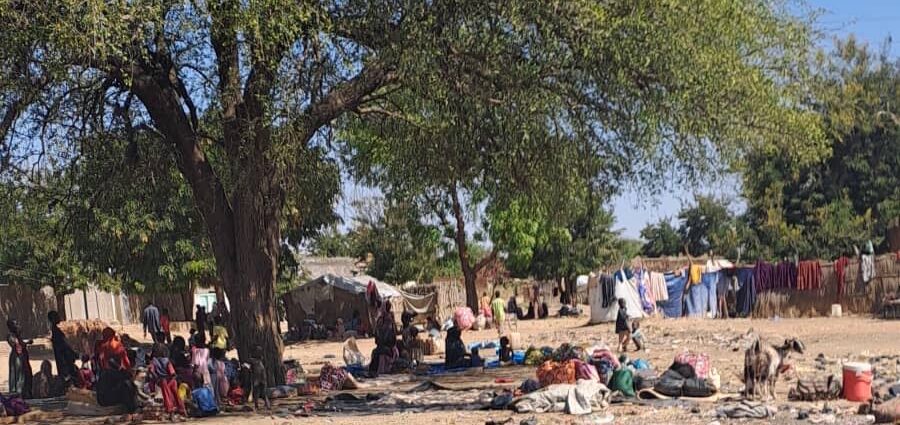
The city of Abu Jubaiha in South Kordofan State is witnessing a sharp rise in daily arrivals of displaced people fleeing Dilling and Kadugli, in one of the largest waves of displacement the region has experienced since the outbreak of war.
Displaced families arriving in the city report extreme humanitarian hardship and dangerous journeys marked by insecurity, deprivation, and violations along displacement routes.
A volunteer with the Sudanese Red Crescent told Darfur24 that at least five tractor-trailers loaded with displaced people reach Abu Jubaiha from Dilling and Kadugli. He said many traveled through areas controlled by the SPLM-North, crossed into South Sudan via the Yida area, and later re-entered Sudan through Talodi, Al-Taqula and Kalogi before arriving in Abu Jubaiha.
He added that five to six large trucks transporting displaced people depart Abu Jubaiha almost daily toward White Nile State, as continuous waves of civilians search for safety, food, and medical care.
The volunteer explained that new arrivals are temporarily sheltered inside the Sudan Red Crescent facilities, where a large tent has been erected. However, capacity remains insufficient, forcing many, including women and children, to sleep outdoors under trees.
According to the volunteer, humanitarian assistance in the city relies on joint efforts by national initiatives, civil society groups, and international agencies, including the Humanitarian Aid Commission, UNICEF, and the Sudan Red Crescent, alongside support from residents. Aid includes communal kitchens, drinking water, clothing distribution, and assistance in arranging transport onward to White Nile State.
Despite these interventions, the volunteer described the physical and psychological condition of displaced people arriving from Dilling and Kadugli as “deplorable,” citing repeated trauma, hunger, and years of siege imposed on the two cities.
He reported the death of a 17-year-old boy on January 19, who arrived alone without family or identifying information. The Abu Jubaiha police buried the child after efforts to identify relatives failed.
According to the volunteer, many displaced persons intend to leave South Kordofan permanently, fleeing siege conditions, food shortages, and lack of medical care. Only a limited number choose to remain in Abu Jubaiha, where they are directed to displacement camps by the Humanitarian Aid Commission.
He further reported that displaced people passing through areas controlled by the Rapid Support Forces were subjected to widespread looting. Others who passed through SPLM-North-controlled areas reportedly faced detention for up to a month and transfer to Kauda following suspicion linked to a drone strike near Kumi. Mobile phones and identification documents were confiscated before their eventual release.
Displaced persons also reported arrests targeting individuals accused of affiliation with the former government or suspected collaboration with the Sudanese Armed Forces. Some said they discarded identity documents en route to avoid arrest.
The volunteer warned that significant numbers of children under 15 have arrived in Abu Jubaiha unaccompanied, having fled Dilling and Kadugli alone to escape hunger, siege, and violence. He stressed these children face grave protection risks and require urgent psychosocial support.
Meanwhile, the Displacement Tracking Matrix (DTM) reported that 175 people were displaced from Kadugli between January 18 and 19, 2026, due to worsening security conditions. Displaced families reportedly fled toward White Nile State.
DTM also recorded the displacement of 255 people from Dilling during the same period amid escalating insecurity. The situation in South Kordofan remains tense and highly volatile.