Dilling, January 06 (Darfur24)
Several people injured in the recent bombardment of Dilling have died due to an acute shortage of medicines, medical supplies, blood, and health workers in the besieged city, Darfur24 sources said, amid warnings of a looming humanitarian and health catastrophe.
The city has been under artillery and air bombardment by the Rapid Support Forces and the Sudan People’s Liberation Army–North (SPLA-N), as fighting continues to intensify.
Mahasin Ali, a member of health committees affiliated with the emergency committees, told Darfur24 that six injured people died after reaching the hospital because of the complete lack of life-saving medicines, medical solutions, and blood required to treat critical cases.
She described the condition of the wounded as “extremely serious,” stressing that the health system in Dilling has nearly collapsed.
According to Ali, last Wednesday’s bombing killed dozens of civilians instantly and injured at least 36 others, who were transferred to Mother Bakhita Maternity Hospital. There, they faced a severe shortage of qualified medical staff capable of performing emergency surgeries, as well as an acute lack of medicines, IV fluids, gauze, and painkillers.
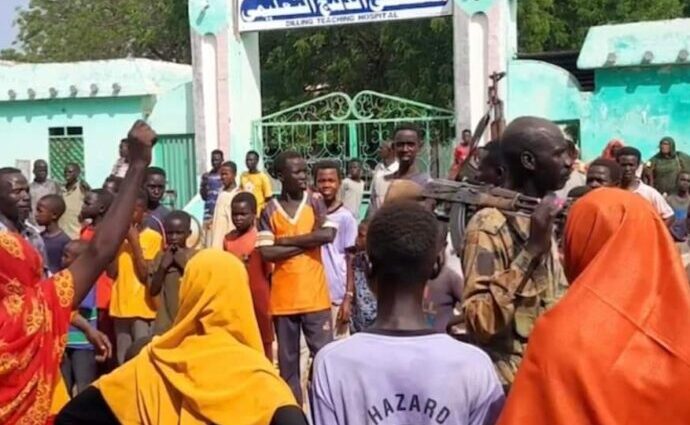
She added that 11 other wounded people were taken to Dilling Teaching Hospital, which suffers from similar shortages. Some patients reportedly left the hospital for fear of continued shelling targeting medical facilities.
Ali said that attempts by health committees to secure supplies through self-funded efforts have been insufficient, as the number of wounded far exceeds the capacity of the limited staff and resources available. She warned that continued attacks would increase deaths inside hospitals, not only at bombing sites.
She also cautioned that the ongoing shortages may force health workers to resort to unsafe practices, such as using mosquito nets instead of medical gauze and working without proper sterilization, significantly increasing the risk of infection and death.
Ali revealed that medicines and medical equipment are stored in warehouses belonging to the Military Medical Corps and the Medical Services Administration, but have not been released to hospitals because they are being reserved for emergencies, while wounded patients continue to die for lack of basic supplies.
She noted that some medicines and medical solutions are available in private pharmacies at exorbitant prices, forcing health committees to purchase whatever they can despite limited resources.
She further explained that the lack of medical personnel is a major factor behind the rising death toll, with only two surgeons and one general practitioner currently working in the city, and no specialist doctors. Most medical services are being provided by Red Crescent volunteers and home-based nurses who are not trained to treat war injuries.
Health emergency committees warned that if the situation continues, hospitals will become places where the wounded die due to lack of care, calling for urgent intervention to supply medicines, deploy medical personnel, and open humanitarian corridors before the number of victims increases further.