Port Sudan, November 21 (Darfur24)
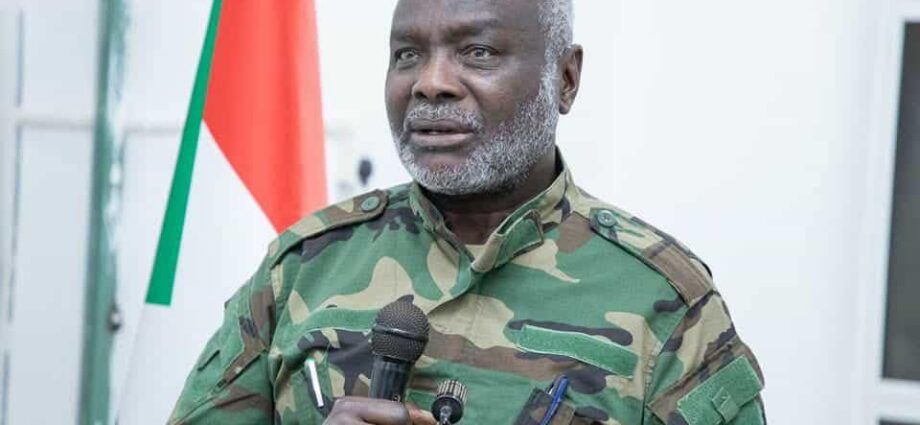
The Sudanese Justice and Equality Movement (JEM), led by Jibril Ibrahim, has welcomed the efforts announced by the US President to help end the war in Sudan, saying its stance on peace is rooted in “supporting every initiative aimed at stopping the bloodshed and achieving a just peace that ensures stability and prevents a return to the cycle of violence.”
Hassan Ibrahim Fadl, the movement’s official spokesperson, told Darfur24 that the statements made by the US President, along with the Saudi efforts revealed on Wednesday, are “a welcome step.” He emphasized that JEM is part of the government, and therefore the government’s declared positions reflect those of the movement as an active political actor.
He noted that the issue is not about “reservations,” but stems from past experiences with the behavior of the Rapid Support Forces (RSF) in dealing with ceasefires and humanitarian truces.
“JEM believes that no ceasefire agreement can succeed without an effective mechanism on the ground to ensure its implementation,” he said, arguing that the RSF “does not abide by any agreement” and that its public commitments contradict “the reality on the ground, where atrocities are committed against civilians, as highlighted by the US State Department.”
Fadl added that the movement is convinced the RSF lacks a unified central leadership capable of controlling its fighters, and believes that the RSF and its allies “do not possess the authority to make decisions on a ceasefire if those decisions contradict the interests of the countries supporting them—foremost among them the UAE.”
He reiterated JEM’s position that the UAE is “part of the crisis and cannot serve as a mediator,” stressing that the success of US–Saudi efforts requires that the UAE “not be included in the process,” as it is “a party to the problem and its role cannot be trusted.”
Fadl concluded by affirming that Saudi Arabia enjoys the trust of the Sudanese people and is well-positioned to play a constructive role, as it “has no special agendas,” making it a suitable partner to support peace efforts.