Rokero, November 05 (Darfur24)
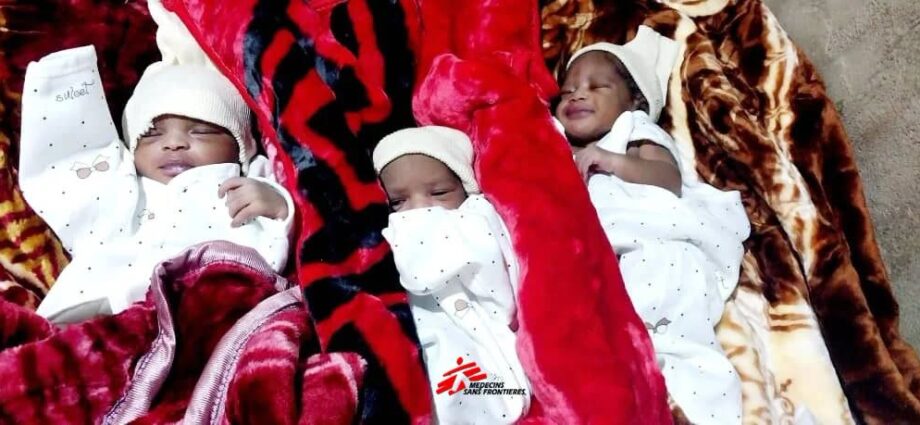
A 36-year-old woman has given birth to triplet girls at Amou Primary Health Care Centre in northern Jebel Marra, in the first such case handled by the medical team of Médecins Sans Frontières (MSF) under its Rokero project in Central Darfur State.
Rahima Abdel Latif delivered the three girls, whom she named Warda, Zuhur and Zahra, on September 28. She believed she was expecting twins and only discovered she was carrying triplets on delivery day. Each baby weighed approximately two kilograms at birth.
Rahima lives in the mountainous village of Amou, about a two-hour walk from the health centre where she received care during childbirth, according to information published by MSF.
The mother struggles to produce enough breast milk for her three daughters, while relatives help care for the babies. MSF’s medical team is monitoring the health and nutritional condition of the mother and children and providing supplementary formula milk.
According to the project coordinator, the birth initially caused anxiety among the midwives until they confirmed that all three babies were safe. The team later welcomed the successful delivery, highlighting the importance of training and support provided to health workers to manage complicated cases.
Difficult access to healthcare
Communities in northern Jebel Marra face significant barriers to healthcare because of the area’s rugged mountainous terrain. A journey of 25 to 30 kilometres can take about four hours, while some residents, including pregnant women, walk for up to seven hours to reach medical facilities.
Through its Rokero project, MSF supports Rokero Hospital and two primary healthcare centres in Amou and Sortoni, as well as community health workers and midwives in villages north of Jebel Marra.
The project serves communities with an estimated population of 580,000, providing maternal healthcare, antenatal and childbirth services, and training for health workers.
MSF’s health promotion teams also conduct village awareness campaigns, monitor diseases and outbreaks, support vaccination programmes, identify and refer malnutrition cases, and help pregnant women access medical care and referrals.