Khartoum, September 17 (Darfur24)
Political and community forces have welcomed the Sudanese-Sudanese Dialogue initiative, and the initiative’s preparatory committee reported positive, constructive communication with several groups.
Committee spokesperson Osman Mirghani told Darfur24 that the committee is pursuing parallel tracks to engage political and community forces.
“Many forces welcomed the dialogue and communication with them was positive,” Mirghani said.
He explained that the committee operates through three offices: political, community and international communications. The community office engages community leaders, including native and religious administrations, displaced people, refugees and victims of the war, while the political office communicates with political forces.
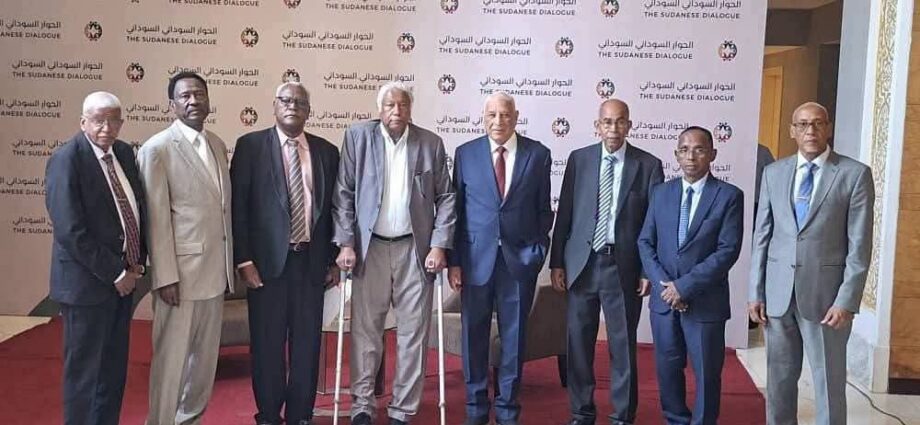
The Sudanese-Sudanese Dialogue Preparatory Committee was formed in Khartoum on August 30 and comprises 19 figures from inside and outside Sudan. Professor Qasim Badri chairs it.
At its launch, the committee said its mission was to create conditions conducive to dialogue and engage political, civil and community forces to develop a vision for resolving Sudan’s crisis.
However, the initiative has faced mixed reactions, with some political forces welcoming it while others have rejected it, arguing that it is not linked to efforts to stop the war and could entrench Sudan’s political and military divisions.
The debate intensified following remarks by Lieutenant General Yasser Al-Atta, army chief of staff and member of the Sovereignty Council, in an interview with Egypt’s Al-Shorouk newspaper on September 13.
Al-Atta said the dialogue was political and outlined an army vision in which the armed forces’ commander-in-chief would serve as head of state for three or four electoral cycles, with winning political parties forming the executive government.
He also said the army leadership supported Abdel Fattah al-Burhan remaining president for several terms, adding that the army would “force him” to continue in the position.
The remarks drew criticism from civilian forces. Khalid Omar Youssef, a leader in the Forces of Freedom and Change, said they reinforced civilian concerns about the nature of the war and the future of governance.
Youssef argued that determining the form of government before the dialogue begins raises questions about its potential outcome and the extent to which civilian forces would be able to influence the political settlement.