Geneva, September 08 (Darfur24)
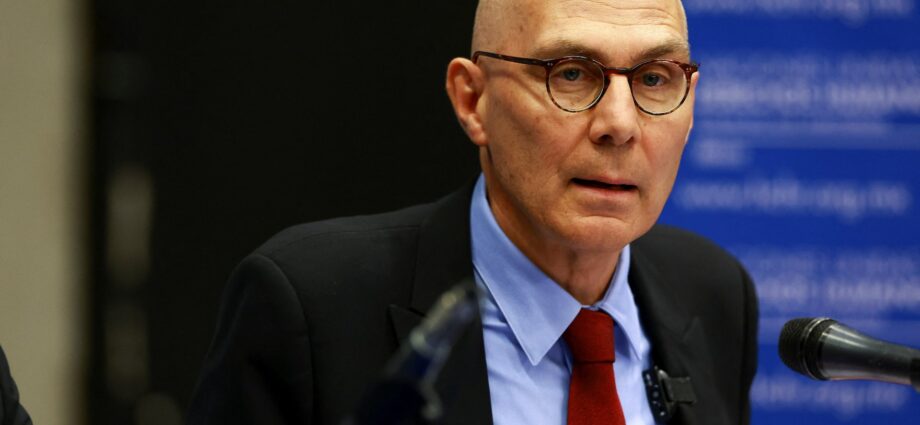
The ongoing war in Sudan took center stage at the UN Human Rights Council on Monday, with High Commissioner for Human Rights Volker Türk calling for an immediate end to attacks on civilians.
Türk warned of deteriorating conditions in Kordofan, Blue Nile, North Darfur and West Darfur, where civilians remain at imminent risk. He called for an immediate ceasefire, an end to foreign interference and a return to full civilian rule.
His appeal followed the release of a report by the Independent International Fact-Finding Mission for Sudan, which warned of the growing use of long-range drones and significant external support to the warring parties, particularly the Rapid Support Forces (RSF).
Mission chair Mohamed Shandi Othman said the use of long-range drones had enabled attacks far beyond traditional front lines, killing and injuring civilians in homes, schools, hospitals, markets, displacement sites and places of refuge, as well as during weddings, funerals and other community gatherings.
“Based on the evidence gathered, we found reasonable grounds to believe that the army and the Rapid Support Forces committed serious violations of human rights and international humanitarian law, which may amount to war crimes,” Othman said.
Against this backdrop, the Sudanese Alliance of Human Rights Defenders, in cooperation with DefendDefenders, called on the Human Rights Council to extend the mandate of the Independent Fact-Finding Mission for Sudan for two additional years.
The mission, established in October 2023 and renewed annually, is due to have its mandate renewed next month. The Human Rights Council is expected to consider an extension during its 63rd session.
Speaking before the council, Noon Kashkoush, advocacy officer for the Sudanese Alliance of Human Rights Defenders, called for the mission to receive the resources and expertise needed to strengthen accountability efforts.
Kashkoush said more than 70 civil society organizations support extending the mission’s mandate.
She condemned continued violations of international humanitarian law, including attacks on hospitals, schools and markets using drones and other weapons.
Kashkoush also urged the international community to enable the mission to collect, consolidate and preserve evidence concerning suspected international crimes. She called for greater protection of civilians and victims, stronger safeguards for women and children, an expansion of the arms embargo and continued pressure on the warring parties to end the conflict.