Khartoum, July 13 (Darfur24)
The UN Food and Agriculture Organization (FAO) has launched a new three-year cooperation framework with the Sudanese government, aiming to mobilize $616 million to support agricultural recovery, improve food security and strengthen resilience.
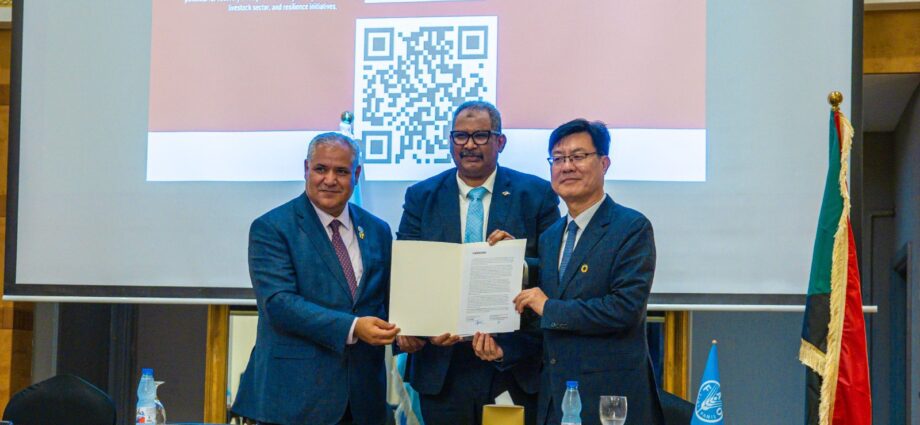
The framework, covering 2026–2028, was signed by Agriculture and Irrigation Minister Ismat Qureshi Abdullah Mohammed and FAO Representative in Sudan Hongji Yang, in the presence of FAO Assistant Director-General and Regional Representative for the Near East and North Africa Abdul Hakim El Waer.
FAO said the framework provides a strategic roadmap to support Sudan’s transition from humanitarian response to long-term recovery. It aligns with national priorities and the UN Interim Cooperation Framework for 2026-2028.
The organization said around 65% of Sudan’s population depends on agriculture, livestock, fisheries and forestry for their livelihoods. However, conflict, economic hardship and climate shocks have severely disrupted agricultural production, markets and food access.
According to FAO, 28.9 million people are experiencing acute food insecurity in 2026, including 10.2 million facing severe or critical levels of hunger.
The framework allocates $230.5 million for emergency response and resilience-building activities, while $385.5 million will support recovery and long-term agricultural development.
The programme focuses on restoring agricultural production and infrastructure, strengthening food value chains and rural livelihoods, promoting sustainable natural resource management and climate adaptation, and supporting women, youth and local institutions.
Agriculture Minister Ismat Qureshi said agriculture remains the backbone of Sudan’s economy and described the framework as a key step toward restoring productivity, strengthening resilience and improving food security.
FAO Assistant Director-General Abdel Hakim El Waer said Sudan has significant agricultural potential, adding that investing in agriculture is also an investment in stability, peace and the country’s future.
FAO Representative Hongji Yang said the framework offers a clear roadmap for restoring livelihoods, strengthening resilience and advancing agricultural recovery in partnership with the government, donors and humanitarian and development partners.
During his visit, El Waer also reviewed FAO projects in Khartoum, Al Jazirah and Sennar states, including seed distribution, livestock vaccination campaigns, mobile veterinary services, irrigation canal rehabilitation and the operation of solar-powered cold-chain facilities.