Damazin, May 13 (Darfur24)
Security authorities in Blue Nile State have suspended the work of emergency response committees assisting tens of thousands of people displaced by the war, amid worsening humanitarian conditions, the spread of disease inside camps, and growing fears ahead of the rainy season.
Informed sources told Darfur24 that authorities halted the committees’ activities last month after demanding details about their funding sources and agreements with donor organizations. Although committee members reportedly submitted the required documents and financial records, the authorities later accused them of receiving support linked to the Rapid Support Forces and ordered the suspension of their operations.
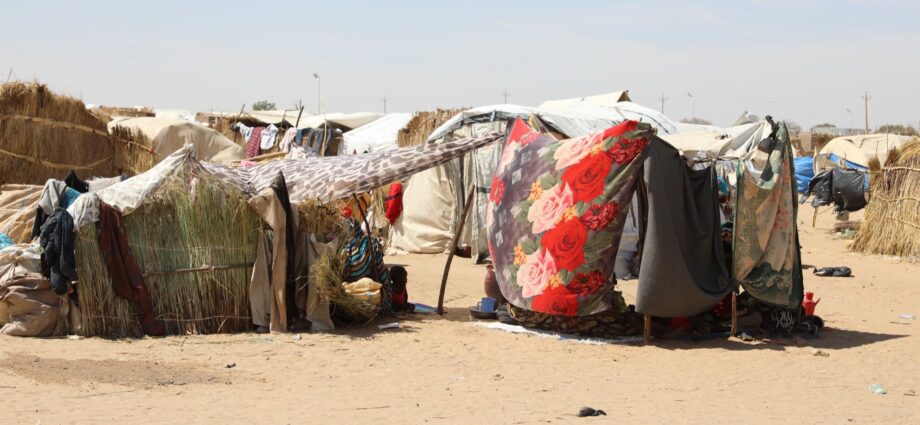
The move comes as displacement camps across Blue Nile face severe shortages of basic services, overcrowding, and mounting health risks.
Sources confirmed that cases of bilharzia have been recorded among displaced people in the Shaheeda Afandi camp due to the lack of sanitation facilities and rainfall flooding, amid the absence of urgent health interventions to contain the spread of disease.
They added that before the committees were shut down, more than 80,000 displaced people were receiving assistance across ten camps in Damazin, Al-Rusayris, Baw, and Wad Al-Mahi localities under conditions described as “extremely difficult.”
The sources also noted that authorities had previously relocated displaced families from schools to alternative sites last year without providing tents or shelter materials, leading to severe flooding in some camps during the rainy season. Concerns are now growing that the crisis could worsen again with the approach of the upcoming autumn rains.
In a related development, the International Organization for Migration (IOM) said the number of displaced people in Blue Nile State reached 49,512 individuals from 9,899 families between January 11 and May 4, 2026, representing a 77% increase compared to the previous reporting period.
According to the organization, most displaced families are sheltering in informal settlements, while others are living inside schools or with host communities. Women make up 57% of the displaced population, while children under the age of 18 account for nearly 46% of those affected.