Khartoum, April 11 (Darfur24)
Medical services in parts of East Darfur and North Kordofan are collapsing under the combined pressure of drone attacks, shortages, and mass displacement, according to testimonies gathered by the United Nations Population Fund from doctors and frontline health workers.
In East Darfur, a drone strike has forced the shutdown of Al-Daein Teaching Hospital, the main referral facility in the state, leaving vast areas without access to critical care. Dr. Badr Al-Din Abdel Nabi said the closure has created a severe gap in life-saving services, with patients now relying on limited alternatives.
He explained that emergency services, particularly maternal and reproductive healthcare, have been redirected to a single functioning facility—the Arab Center—now the only provider of comprehensive obstetric and neonatal care in the state.
In North Kordofan, the situation is similarly dire. The city of El Obeid, which hosts large numbers of displaced people, has seen repeated attacks affecting key health infrastructure, including El Obeid Maternity Hospital—the only major referral center serving western Sudan.
The hospital caters to more than 230,000 displaced people, most of them women and girls, and continues to operate under extreme strain. Dr. Hassan Babiker said the facility faces constant power outages, rising fuel costs, and critical shortages of medical supplies.
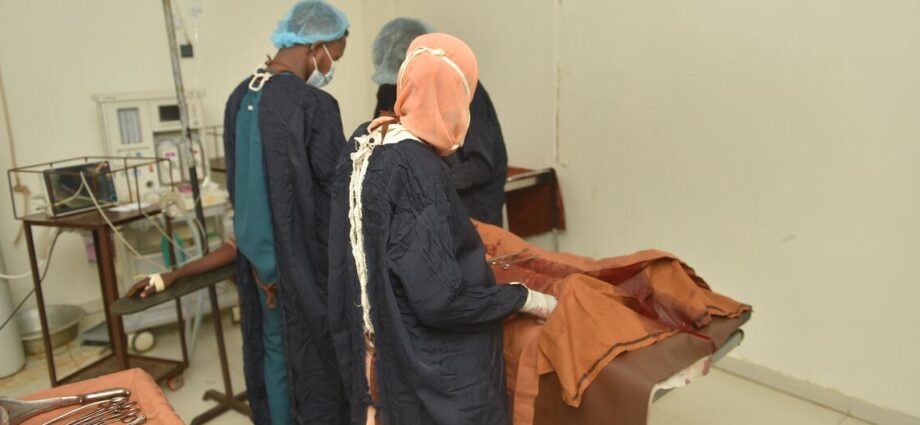
Despite support from the United Nations Population Fund, only four of the hospital’s seven operating rooms are currently functional. Staff report shortages of essential items, including antibiotics, surgical sutures, gloves, and anesthesia supplies—conditions that have contributed to preventable deaths.
Medical workers described harrowing incidents linked to the lack of capacity. In one case, premature triplets requiring intensive care could not be admitted due to a shortage of beds. Two of the infants died, while the fate of the third remains unknown after discharge.
Health workers say they continue to operate under immense pressure, often compensating for shortages themselves. Insaf said staff salaries are insufficient even for basic needs, yet midwives regularly cover the cost of essential supplies for patients who cannot afford them.
Inside delivery rooms, conditions remain critically inadequate. Laila Sarfo described a lack of basic equipment, including sterilization units, newborn care tables, and infection control materials such as cotton and sterile gauze. Facilities also lack privacy measures and climate control, further complicating care delivery.
Despite these challenges, hospitals continue to receive a steady influx of displaced women and children from across conflict-affected areas, as needs rise while resources continue to shrink.
The accounts highlight a worsening humanitarian crisis in Sudan, where ongoing violence and limited access are severely undermining already fragile health systems, leaving millions without reliable medical care.