Nyala, February 11 (Darfur24)
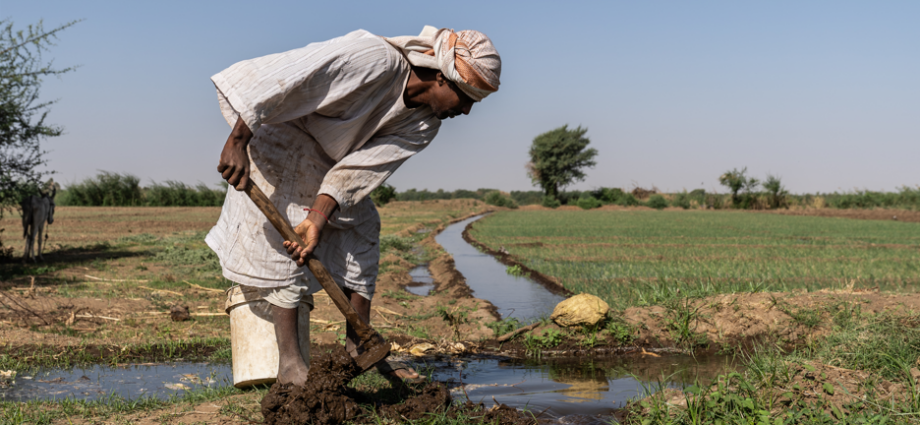
Farmers in South Darfur State are warning of a sharp decline in crop production this season, citing soaring farming costs, market stagnation, and the spread of spoiled agricultural inputs — pressures they say are pushing many growers to scale back cultivation or halt production entirely.
Farmers say the sharp rise in fuel, fertilizer, and seed prices, coupled with falling market returns, has made vegetable farming increasingly unsustainable. Preparations for the winter season typically begin in August, with farmers planting crops such as okra, tomatoes, onions, arugula, chili peppers, potatoes, cucumbers, and sweet potatoes. This year, however, many producers have reduced the areas under cultivation compared to previous seasons.
Farmers in the Bulbul Timbuktu area told Darfur24 that production per acre no longer covers its true cost due to the continuous increase in input and transportation expenses.
Farmer Abdullah Mohammed Abdullah said the price of a barrel of gasoline has exceeded one and a half million Sudanese pounds, noting that every five acres requires half a barrel per month over a four-month growing cycle. He added that many recently imported seeds have proven spoiled and unsuitable for planting, forcing farmers to purchase additional quantities and doubling their losses.
Abdullah explained that Bulbul, Wad Al-Fursan, and Jumayza in the Kass locality — along with parts of Balil locality — are among the main vegetable-producing areas that supply South, East, and North Darfur. However, he said much of this production has halted this year due to rising costs.
Al-Taher Abdel-Hakim, a farmer, noted that vegetable prices have dropped significantly because of liquidity shortages and market stagnation. He added that a box of tomatoes sells for about 40,000 pounds at most, while a sack of green okra reaches 50,000 pounds, potatoes 50,000 pounds, and onions 120,000 pounds.
“When calculating the costs of fuel, fertilizers, seeds, transport, and spoilage, the farmer finds himself drowning in debt,” Abdel-Hakim said.
He called on international organizations to support farmers by providing solar energy systems for irrigation, importing improved seeds and fertilizers, and offering suitable transportation options such as tuk-tuk vehicles.
An agricultural engineer at South Darfur’s Ministry of Agriculture, speaking on condition of anonymity, confirmed that farmers have been directly affected by the war, which has contributed to the influx of unregulated and spoiled seeds from neighboring countries.
She said seed imports were previously monitored through a committee that included representatives from the Standards and Metrology Organization, traders, the ministry, and other authorities, but oversight mechanisms have effectively stopped during the conflict.
Over the past year, she supervised agricultural fields in Bilel locality where spoiled seeds failed to sprout for more than a month, forcing their return to suppliers.
The engineer warned that the use of expired or unknown agricultural inputs has caused significant losses for farmers and consumers alike. According to the latest ministry figures, South Darfur cultivates more than 10,000 acres during winter and summer seasons across Kass, Balil, Ad-Darfur, Al-Salam, and Mershing localities, areas traditionally known for high productivity that supports neighboring states.