Port Sudan, October 6 (Darfur 24)
Sudan and South Sudan reached an agreement on Monday to regulate border crossings, exchange security information, and protect oil fields and pumping stations, according to a joint statement issued at the end of a high-level visit to Port Sudan.
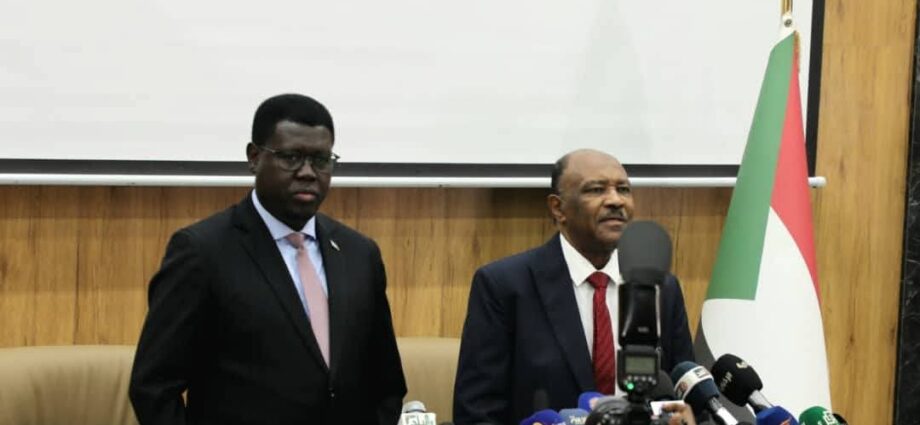
The statement was released during a joint press conference held by the two Foreign Ministers, Muhieddin Salim of Sudan and Monday Semaya of South Sudan, following two days of talks.
The two countries agreed to activate regular political consultations between their foreign ministries and to strengthen cooperation in counterterrorism, security information sharing, and border security.
They also agreed to establish a joint economic committee to boost cooperation in trade, investment, energy, oil, agriculture, transportation, and infrastructure, and to support partnerships between the public and private sectors.
According to the statement, Sudan will allocate a free zone in Port Sudan for South Sudan to support oil industry development and facilitate transit trade between the two countries. Both sides stressed the importance of protecting the rights and welfare of their citizens and addressing migration challenges.
The ministers agreed to exchange bilateral and technical visits in the coming period. A Sudanese delegation led by the Vice President for the Economic Sector, along with the Ministers of Trade and Industry and Petroleum officials, is expected to visit Juba soon.
During his visit, Semaya met Sovereignty Council Chairman and Army Commander Abdel Fattah al-Burhan, delivering a written message from President Salva Kiir Mayardit. He also met Vice Chairman Malik Agar to discuss strengthening cooperation in the economy, oil, infrastructure, education, health, and social welfare.
The two foreign ministers held a joint session where they agreed to reactivate joint committees in the political and security fields, deepen economic and trade relations, open banking channels, and regulate border movement.
Semaya also met with the Minister of Energy and Petroleum, agreeing to exchange expertise and visits to address challenges in the oil sector and protect energy infrastructure. In a separate meeting with the Minister of Interior, both sides reaffirmed their commitment to protecting citizens in both countries.
Finally, Semaya met with the Director of the General Intelligence Service, where both parties agreed to enhance coordination and information sharing between security agencies to address shared challenges, including those affecting their citizens.