Nahud, July 25(Darfur24)
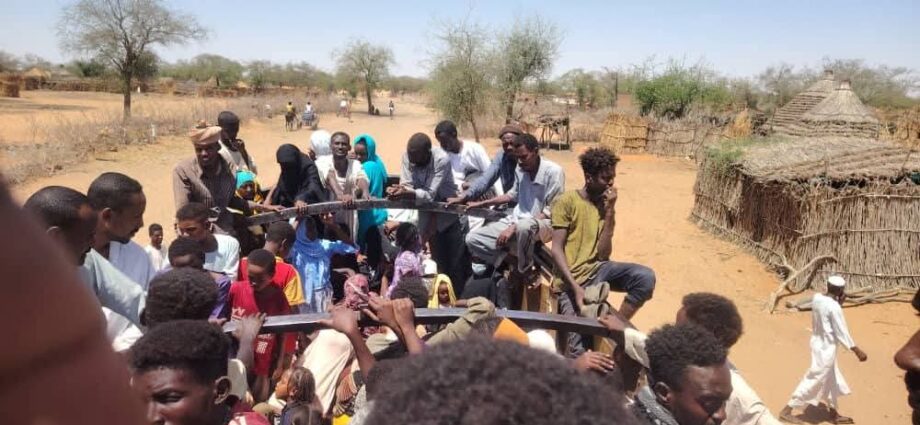
The Humanitarian Aid Commission (HAC) in West Kordofan State painted a bleak picture of the humanitarian situation in the state following the fall of the city of Nuhood to the Rapid Support Forces (RSF)that resulted i widespread displacement of civilians.
Commissioner Al-Jili Al-Hadi told Darfur 24 that the situation in the state is “extremely difficult and worrisome due to the disruption of vital facilities.”
He revealed that approximately 120,000 families have been displaced following the fall of Nuhood, the state’s temporary administrative capital, in addition to the presence of 42,000 families trapped in conflict areas.
Al-Jili indicated that 470 families enter El Obeid daily, requiring urgent intervention in the form of tent, clothing, food, and healthcare.
He appealed to the state, as well as local and international organizations and institutions, to immediately intervene to fill the significant gap created by the displacement.
Despite the tragedy experienced by the displaced people in El Obeid and the villages in the vicinity of Nuhood, the Commissioner indicated their inability to obtain accurate statistics on the number of families facing difficulties in these areas.
RSF took control of Nuhood on May 2, while two weeks ago, violent clashes erupted with the Sudanese army and the joint force affiliated with Darfur movements in El Khoi, amid ongoing fightingand displacement from the two cities.
The United Nations Displacement Tracking Matrix announced last May that more than 46,000 people had been displaced from the towns of Nuhood and El Khawi in West Kordofan State, as a result of clashes between the Sudanese army and the Rapid Support Forces in the area.
The matrix explained that the majority of the displaced people (approximately 66%, or 23,105 individuals) remained within Nuhood locality, while others fled to neighboring localities, including Ghubaysh (16%), Al Adiya (6%), and Wad Banda (6%), in addition to other areas.