El Fasher, July 24(Darfur 24)
A number of residents of El Fasher, North Darfur, have been forced to grow plants in empty spaces in abandoned homes and unused streets , in an attempt to secure food supplies amidst the city’s crippling siege by the Rapid Support Forces (RSF).
The RSF siege of the city has prevented residents from accessing agricultural land outside the city, as they have done every autumn.
Sakina Mohammed Adam, a resident of the Al-Shorfa neighborhood north of El Fasher’s Grand Market, told Darfur 24 that she had resorted to planting crops in three houses whose owners had left this year, in order to provide for some of her family’s food needs.
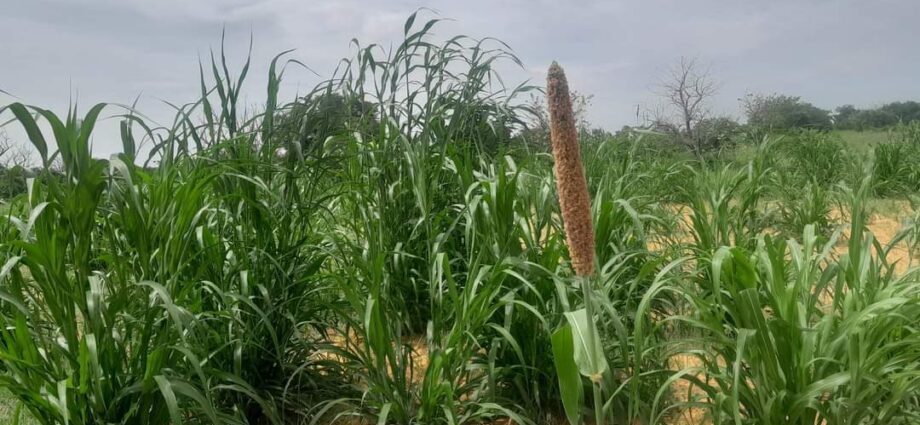
She explained that she had planted okra in one house, peanuts, hibiscus, and cowpeas in another, while she had allocated the third house to grow lentils, corn, and millet.
She added that the Naivasha market offers a variety of seeds at reasonable prices, which has encouraged a number of citizens to utilize hundreds of empty houses for agriculture.
In the same context, Hamid Haroun, a displaced person residing in the Abshok camp north of the city, stated that the siege has forced residents to cultivate unused land within residential neighborhoods, including abandoned houses and streets, using seeds provided by the Food and Agriculture Organization of the United Nations (FAO) in previous years.
Haron indicated that the most prominent crops grown include okra, lentils, watermelons, cucumbers, hibiscus, and peanuts.”
He added that residents have focused particularly on growing okra after the price of a 45 kilo sack of milled okra reached 6 million Sudanese pounds.
In the Awlad al-Reef neighborhood, south of the city, citizen Sayyida Muhammad Ibrahim said that dozens of abandoned houses and some internal streets have been planted with crops for later use. She confirmed that she planted six houses with various crops.
For his part, a local official with the Humanitarian Aid Commission in North Darfur, who preferred to remain anonymous due to lack of a permit, revealed to Darfur 24 that the imposed blockade has prevented residents from reaching their farms in the western and northern rural areas of El Fasher, especially Goz Abu Zariqa, one of the largest agricultural areas surrounding the city.
He explained that approximately 50% of El Fasher’s residents rely on agriculture as their primary source of income, while the remainder rely on local production from farmers within the city and some other localities.
He pointed out that the areas of Qoz Abu Zariqa, Golo, Shagra, the northern countryside of El Fasher, and the eastern areas of the city used to produce large quantities of corn, millet, lentils, okra, and peanuts annually, but these have fallen out of production due to the fighting.
The official added, “Although the effects of the blockade began last year, its full results will become apparent after the harvest season, with the depletion of previous years’ stocks and the shrinking cultivated areas this year and the previous year.”
He emphasized that agriculture within residential areas is insufficient to meet the needs of the population, whether in terms of quantity, quality of crops, or available space, in addition to the limited harvest period.
The Rapid Support Forces have imposed a tight siege on El Fasher since April of last year in an attempt to seize control of the city, which is considered the last stronghold of the Sudanese army in the Darfur region. They had previously seized control of the cities of Nyala, Zalingei, El Geneina, and El Daein in 2023.