Biale , July 13(Darfur24)
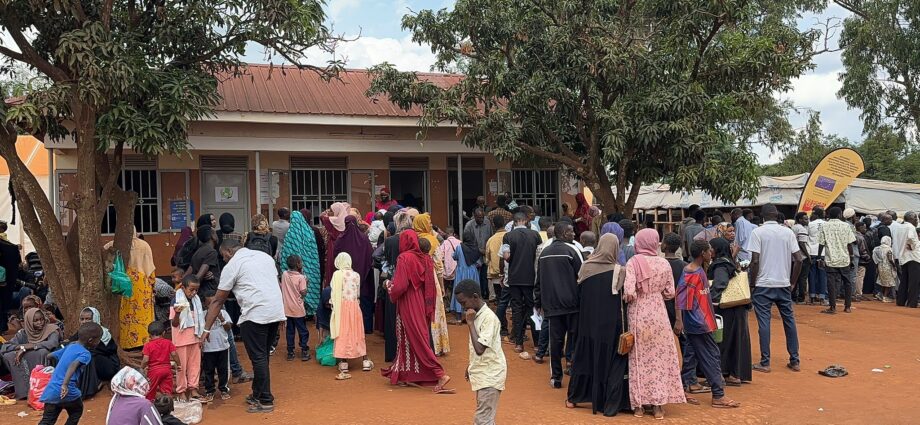
Sudanese refugees have expressed fears of repeated attacks on the Kriandongo refugee camp in the northern Ugandan town of Biale, despite the imposition of a curfew and the deployment of Ugandan army units.
On Thursday and Saturday, South Sudanese refugees attacked Sudanese settlements in the Kriandongo camp, killing one Sudanese refugee and wounding others.
The Biale County Governor, along with army, police, and security leaders, and the Prime Minister’s Office official responsible for refugee affairs, held a prolonged meeting with the Sudanese refugee leadership office and the Nuer community, in the presence of officials from the United Nations High Commissioner for Refugees (UNHCR).
The head of the Sudanese refugee community in Uganda, Engineer Hassan Timan, said in a press statement a descion was taken in the meeting to impose a state of emergency and a curfew within the camp from 7 p.m. to 7 a.m.
He explained that the Ugandan army is currently deployed to refugee settlements to ensure their protection. He noted that the refugee community leadership called on all Sudanese refugees in the camp to fully adhere to the meeting’s decisions.
Timan stated that Nuer community leaders pledged to cooperate in apprehending the perpetrators and preventing any recurrence of hostilities. They acknowledged that the crisis erupted due to disputes over agricultural land inhabited by Sudanese refugees.
New Displacement
The camp has witnessed increasing tensions in recent months due to scarce resources and the absence of effective security policies.
A number of Sudanese refugees expressed fears that their shelters in the camp could be subject to further attacks.
Ali Ibrahim, a Sudanese refugee and father of a family residing in Cluster L in Kiryandongo camp, told Darfur 24 that the attack occurred yesterday evening around 9:00 a.m., targeting Clusters L, C, and B. The attack lasted for about three hours, resulting in the death of Kabashi and the injury of approximately 60 Sudanese refugees with injuries ranging from minor to serious.
He indicated that the refugees in Cluster L evacuated their homes, some heading to the reception area, while others fled to neighboring towns such as Golo, Kiryandongo, and Masindi, after being attacked by refugees from South Sudan.
He explained that the refugees from the camp are unable to return to their homes due to the repeated attacks, stressing the absence of any serious steps by the Ugandan government to contain the situation.
He added that these armed groups, affiliated with some Nuer, have been attacking refugees for about a year with the aim of looting, and despite informing the Office of the Prime Minister responsible for refugee affairs, the authorities have taken no significant action.
He confirmed that these groups are now roaming around publicly in the streets between the clusters, in full view of the Ugandan authorities. He said, “After the recent incidents, we approached a UNHCR official, but they told us they couldn’t do anything.”
Unsafe
Ishraga Osman, a Sudanese refugee and housewife, told Darfur 24 that the attack last Saturday began in Cluster C, where she lives, and involved at least 400 people, including women and children, who violently attacked the cluster.
She added that the attack occurred while the refugees were inside their homes, forcing the youth to defend themselves and their families. She criticized the inaction of the Ugandan police, who did not intervene effectively to end the clashes.
She pointed out that the majority of the camp’s residents are women and children from the most affected war zones in Sudan, such as Khartoum, Darfur, Al-Jazeera, and Kordofan.
For his part, Ahmed Khaled, another Sudanese refugee, told Darfur24 that they are living in a completely unsafe environment inside the camp.
In a related context, Sudanese and South Sudanese civil society organizations, in a joint statement, expressed their grave concern over the escalating violence among youth inside the camp, calling on everyone to exercise restraint.
They emphasized that violence—whether perpetrated by individuals or groups—cannot and should not be a means of resolving conflicts.
The organizations called on community leaders, religious leaders, elders, youth, and families to refrain from retaliatory responses and work to promote calm in their surroundings.
The statement called on the Ugandan Prime Minister’s Office and UNHCR to ensure the safety and dignity of all refugees, especially youth.