Tawila, July 12(Darfur 24
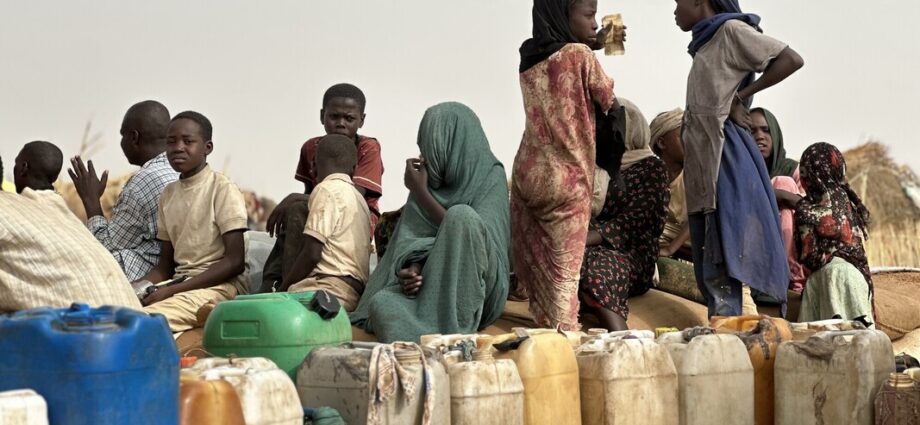
The Norwegian Refugee Council (NRC) has revealed the dire conditions facing displaced people in Tawila locality in North Darfur State, where families are relying on scraps amid a scarcity of clean water and increasing cholera cases.
Tawila, which is under the control of the Sudan Liberation Movement led by Abdul Wahid Mohamed Nour, is home to hundreds of thousands of people who fled El Fasher and the Zamzam and Abu Shouk camps.
The NRC’s Country Director in Sudan, Shashwat Saraf, said the situation in Tawila is rapidly deteriorating.
He added: “Families are living on scraps , sleeping on the ground under thatched roofs, amid a severe shortage of clean water and toilets. Cholera cases are on the rise, and the rainy season is fast approaching, further worsening living conditions.”
NRC explained that Tawila received approximately 379,000 people who fled El Fasher and Zamzam camp, 70% of whom were women, children, and people with disabilities. They arrived on foot after days of fleeing for their lives.
The Norwegian NGO noted that four new camps have been established to accommodate the increasing numbers, at a time when humanitarian organizations are unable to meet needs after aid previously allocated for the rainy season ran out.
In June 2025, NRC conducted an assessment in the four new camps in Tawila, which house approximately 213,000 people.
The assessment revealed a severe water shortage, with only approximately 21,000 individuals—equivalent to 10% of the displaced p—having regular access to water.
It noted that only 2,684 households have access to toilets, representing less than 10%, while 31,238 households remain without access to sanitation services.
NRC reported that the majority of families reported eating one meal a day or less, and that there are only 11 temporary learning spaces, depriving large numbers of children of the opportunity to attend school.
The Council highlighted significant protection concerns, as 39% of women in the camps are pregnant or breastfeeding, while 22% of households include members with disabilities, lacking adequate services and support.
NRC indicated that 60% of camp residents plan to stay for the long term, while 27% have no plan, reflecting feelings of fear and uncertainty.
Rainfall from June to October is expected to exacerbate the situation in Tawila, given the difficulty of access due to poor road conditions.