Nyala, September 01 (Darfur24)
The leadership body of Sudan’s Founding Alliance (TASIS) has approved a vision for what it described as a just and sustainable peace, established a political reference mechanism for negotiations and the peace process, and endorsed plans to form a “New National Army.”
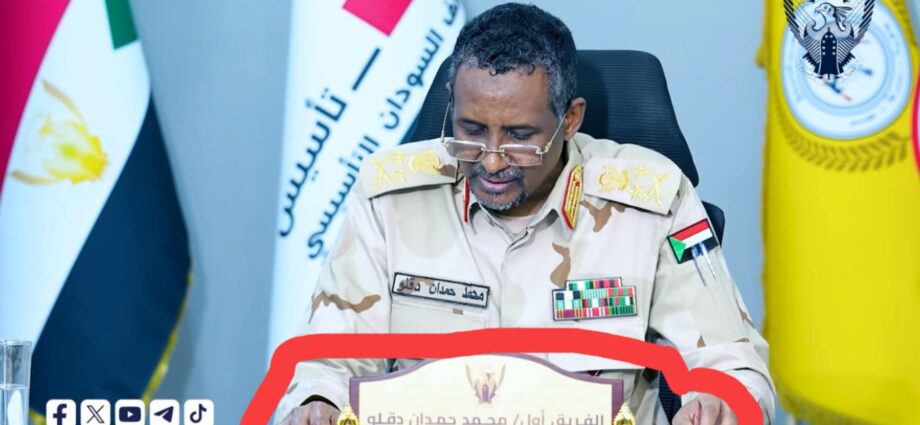
The decisions were taken during a leadership meeting held in Nyala from August 26 to 30 and chaired by Mohamed Hamdan Dagalo.
In a statement issued Tuesday, the alliance said the meeting endorsed its peace vision, which focuses on addressing what it called “the roots of the Sudanese problem and critical issues.” It also reaffirmed its commitment to the Sudanese Founding Charter and the 2025 transitional constitution.
The new political reference mechanism will oversee negotiations and the peace process, strengthen political engagement inside and outside Sudan, and coordinate with political forces while continuing engagement with regional and international platforms.
The decisions come as preparations for a Sudanese-Sudanese dialogue are underway in Khartoum. The dialogue preparatory committee has begun consultations with political, civil and community groups on the transitional period and future governance arrangements.
TASIS also announced plans to establish the “New National Army,” strengthen security and stability, and activate its executive and specialized committees.
The alliance called for completing the structures of what it described as the “government of peace” and addressing security, economic and humanitarian challenges, including corruption, while expanding access to education, healthcare and drinking water.
It also cited what it described as achievements by the transitional peace government, including the organization of Sudanese Certificate examinations, efforts to reopen universities and colleges, approval of a strategic framework and guidelines for the 2026 interim budget, and the provision of health and humanitarian services.
The alliance accused the Sudanese army of carrying out airstrikes against civilians and said it had decided to establish a register to document alleged attacks by army and foreign aircraft.
It also accused unnamed neighboring countries of providing military, logistical, political and diplomatic support to the army, including through drones, fighter jets and military bases. The alliance further accused the army of carrying out an airstrike inside Chad, describing the alleged attack as a threat to regional and international peace and security.
The decisions reflect a growing political and institutional dimension to Sudan’s war, with the rival camps seeking to establish governing structures and claim political legitimacy in areas under their control.
While the military camp is promoting a political process centered in Khartoum, the Ta’sis-aligned government in Nyala is seeking to project itself as an alternative political and administrative authority with its own institutions and peace agenda.
The competing structures have raised concerns that continued war could deepen Sudan’s geographical and institutional fragmentation.