Al-Nuhud, August 06 (Darfur24)
Killings, arrests, and house raids have increased in Al-Nuhud, West Kordofan State, over the past several days, coinciding with the arrival of large Rapid Support Forces (RSF) reinforcements, according to eyewitnesses and residents.
Residents told Darfur24 that at least four civilians were killed over three days, while others were arrested during raids carried out by RSF personnel, who control the city.
Among those killed was Walid al-Din al-Tayeb Omar, 20, who residents said was shot dead by RSF members attempting to arrest him in the village of Al-Sharati, north of Al-Nuhud.
In a separate incident, Suleiman Mohamed Suleiman, known as “Al-Jaqar,” was killed in the village of Qaryoud, south of Al-Nuhud. Darfur24 was unable to independently verify the circumstances of his death.
Eyewitnesses also reported that RSF personnel shot dead a resident identified as Ayman in the Al-Thawra neighbourhood in Al-Nuhud, while another young man was killed in a separate incident, the details of which remain unclear.
Residents said RSF forces have intensified night-time raids on homes and arrested several civilians on suspicion of communicating with the Sudanese army.
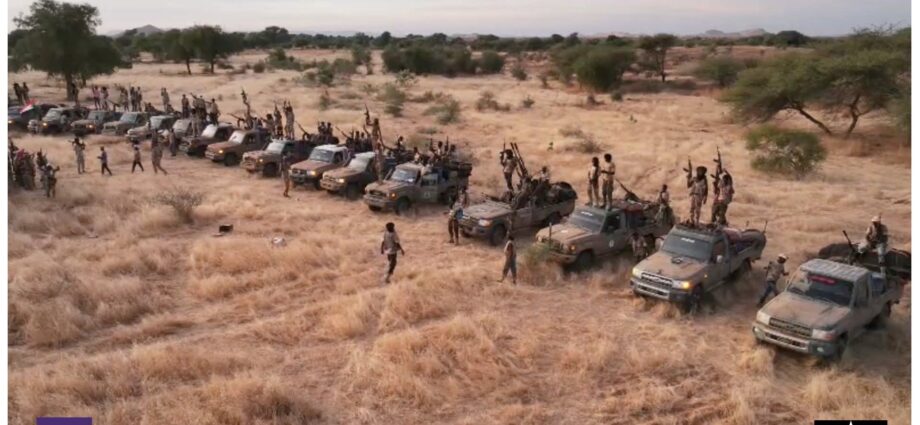
Witnesses reported that substantial RSF reinforcements have arrived in the area over the past two weeks. Some units were deployed in Wad Al-Haliou forest west of the city, while others were stationed in eastern neighbourhoods, alongside the continued arrival of military supply trucks.
The developments come as fighting in Kordofan intensifies following recent advances by the Sudanese army, which has recaptured Jabra al-Sheikh, Umm Qurfa, Umm Sayala, and Bara over the past two weeks.
The reported gains have prompted the RSF to reinforce its positions in Al-Nuhud, Al-Mazroub, and Ayal Bakhit amid expectations of further clashes in western Kordofan.
Al-Nuhud is a key logistical hub linking Kordofan with the Darfur region, making it strategically important as fighting shifts across Kordofan. The RSF has strengthened its presence in the area as front lines continue to evolve.