Khartoum, June 24 (Darfur24)
The Saad Kassis-Mohamed Center announced a commitment to fund the removal of 100,000 litres of plastic waste and waterborne debris from the River Nile in Khartoum, describing the initiative as part of a broader effort to address the environmental and public health challenges facing Sudan amid the ongoing conflict.
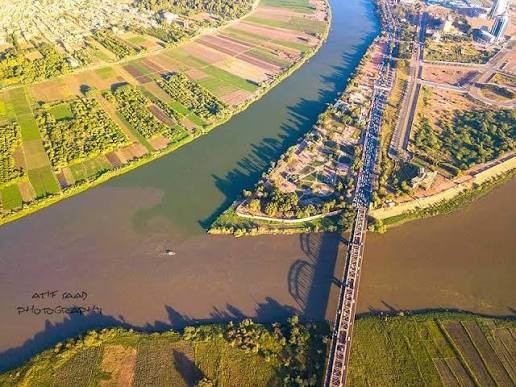
The commitment forms part of the Center’s global campaign to remove one million litres of waste from waterways and ecosystems around the world. The initiative focuses on Khartoum, where the Blue Nile and White Nile meet to form the River Nile, a waterway that supports millions of people across eleven countries.
In an interview with Darfur24 following the announcement, Michael Smith, Communications Director for the WeCare Foundation, said the decision to focus on Khartoum was driven by the close link between environmental degradation and Sudan’s humanitarian crisis.
“The Nile is a source of drinking water, food, agriculture, livelihoods, and survival for communities already facing war, displacement, and institutional breakdown,” Smith said. “At a time when public infrastructure is under severe strain, pollution in the river becomes both an environmental and public health concern. The Center’s view is that war should not make environmental protection secondary. Protecting the Nile is part of protecting the people who depend on it.”
The Center’s announcement follows growing concern over pollution in the Nile Basin. Research cited by the organization indicates that a significant portion of Khartoum’s plastic waste enters waterways that feed into the Nile, while studies have detected microplastics in fish caught at Al-Mogran, the confluence of the Blue and White Nile rivers.
Smith said the findings highlight the direct impact of environmental contamination on communities.
“The presence of microplastics in fish caught around Al-Mogran and sold in local markets is concerning because it suggests a direct pathway between river pollution and human exposure,” he said. “Many communities depend on the Nile not only for food, but also for washing, irrigation, and water access.”
He added that the long-term health effects of microplastic exposure remain under study, but warned that plastics can carry chemical residues and other pollutants through the food chain.
The Center said implementation of the cleanup project will be carried out through local environmental actors and community-based partners, with activities dependent on security and access conditions.
According to Smith, the first phase will focus on identifying major pollution points along riverbanks, drainage channels and waterways feeding into the Nile.
“The second stage will involve removal, sorting, documentation, and safe disposal or recycling where possible,” he explained. “Overall responsibility for the commitment remains with the Saad Kassis-Mohamed Center, while practical implementation will be conducted with appropriate local partners under clear reporting and verification procedures.”
The organization also called for greater international support for environmental infrastructure in Sudan, arguing that wastewater treatment, sanitation and waste management should be viewed as essential humanitarian priorities.
“International support should not be limited to emergency food and medical assistance,” Smith said. “It should also include the environmental infrastructure that protects public health. Wastewater treatment, municipal waste management, and riverbank cleanup are part of humanitarian recovery.”
Among the priorities identified by the Center are the rehabilitation of wastewater treatment facilities, restoration of damaged sanitation systems, emergency waste collection, drainage clearance and expanded monitoring of water quality and fish contamination.
Smith stressed that the initiative would be evaluated through measurable indicators rather than symbolic commitments.
“The Center intends to measure success through transparent and verifiable indicators,” he said. “These will include the volume of waste removed, the number of sites covered, photographic documentation where safe, collection records, disposal or recycling records, and partner reporting from the ground.”
He added that periodic public updates would be issued to allow Sudanese communities, media outlets and international partners to track progress.
“This commitment must produce measurable and visible results, not simply a symbolic announcement,” Smith said.
The Saad Kassis-Mohamed Center is an initiative of the WeCare Foundation, a Cape Town-based organization that works on environmental justice, human rights and community protection projects across Africa and other regions. The Center says its Nile initiative aims to draw attention to the environmental consequences of Sudan’s conflict while supporting efforts to protect one of Africa’s most important waterways.