Tebessa, May 11 (Darfur24)
Before sunrise, families in the villages east of Jebel Marra begin journeys few can endure. Men tie together wooden poles and blankets to improvise stretchers. Women pack water and scraps of food. Then they begin walking — across valleys, rocky hills, and dirt paths — carrying the sick on their shoulders toward the only health center in the area.
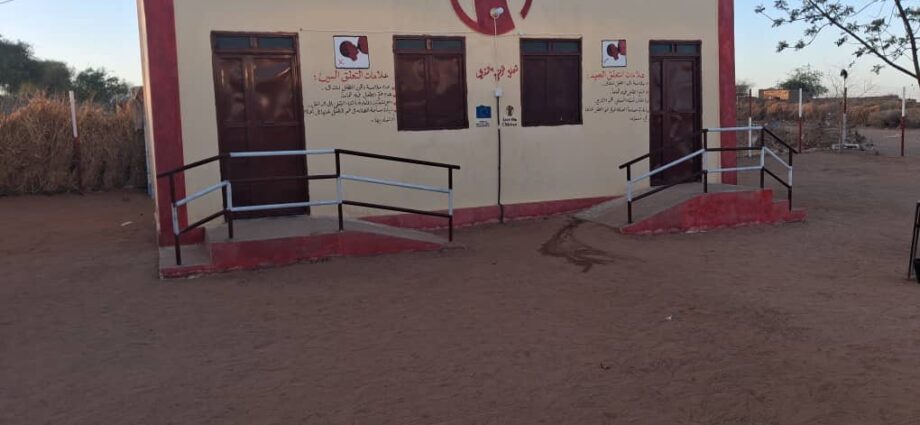
For many, the destination is the health center in Tebessa, a modest facility that residents say lacks medicines, medical staff, and even the most basic supplies needed to save lives.
In eastern Jebel Marra, where ambulances are nonexistent and roads are barely passable, illness has become more than a health issue. It is a dangerous journey that many patients do not survive.
“We carry patients for long distances because there is no other option,” said Adam Zakaria, a resident of the Sando Farda area. “Sometimes people walk for hours trying to reach Tebessa. Pregnant women suffer the most.”
Zakaria told Darfur24 that families in villages scattered across the mountainous region are forced to transport patients manually, often through harsh terrain, because there are no vehicles or emergency transportation services available.
He said the Tebessa health center itself is struggling to function.
“The center lacks the most basic medical services,” he explained. “People arrive exhausted after traveling long distances, only to discover there are no medicines or staff to treat them.”
According to residents, delays in reaching treatment have contributed to rising deaths among pregnant women, elderly patients, and people suffering from chronic illnesses.
A Region Cut Off
Eastern Jebel Marra has long suffered from weak infrastructure and limited humanitarian access, but residents say conditions have deteriorated sharply since the outbreak of war in Sudan in April 2023.
Villages such as Sandu Farda, Kambur, and Fia Mari now rely almost entirely on Tebessa’s health center, despite its severe shortages.
A local health official acknowledged the worsening humanitarian situation in the area, admitting that health services remain extremely limited across eastern Jebel Marra and neighboring villages.
“The needs are far greater than the available resources,” the official told Darfur24.
Residents say the absence of functioning clinics, ambulances, medicines, and trained health workers has turned treatable illnesses into life-threatening conditions.
Ahmed Adam, a teacher in the region, described the health crisis as part of a broader collapse in basic services.
“Citizens here are living under exceptional circumstances,” he said. “The suffering is not only about health. There is also a shortage of water and other essential services. But healthcare is the biggest challenge because one medical emergency can destroy an entire family.”
He explained that the Tebessa center serves dozens of villages despite lacking medical personnel, medicines, and surgical equipment.
“The simplest cases become dangerous because there is no treatment,” he said. “Families are forced to continue traveling to distant places like Qulu or Tawila in search of care.”
For many residents, those journeys are impossible.
Mothers at Risk
Among the most vulnerable are pregnant women, who often face labor complications far from any equipped medical facility.
Residents say some women are forced to give birth during the journey to Tebessa, while others die before reaching help.
Without ambulances or reliable transportation, families rely on donkeys, wooden carts, or their own shoulders to move patients across isolated terrain.
In the rainy season, the situation becomes even worse as roads are cut off and villages become inaccessible.
Humanitarian organizations have only a limited presence in parts of eastern Jebel Marra, while insecurity and logistical challenges continue to hamper aid delivery.
Residents are now appealing to the health sector of the civilian authority affiliated with the Sudan Liberation Movement, as well as humanitarian organizations, to urgently intervene and expand health services in the region.
Until then, families will continue making exhausting journeys through the mountains — carrying the sick on their shoulders in search of care that may or may not exist when they arrive.