Nyala, May 06 (Darfur24)
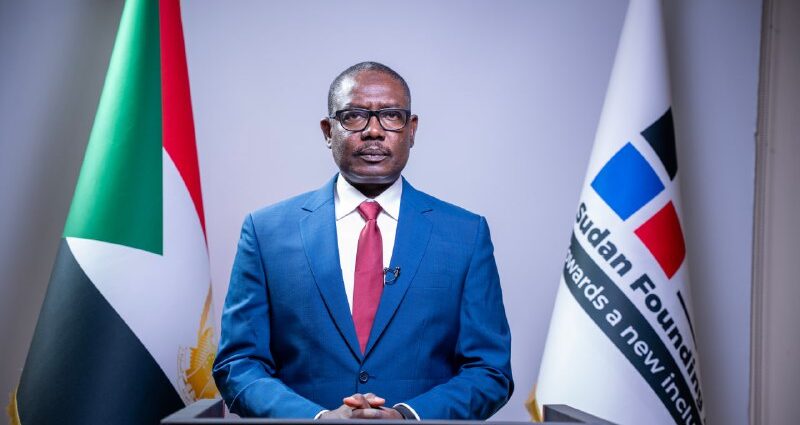
The Prime Minister of the “Founding” government, Mohamed Hassan Al-Ta’aishi, has issued a series of decrees appointing ministers, undersecretaries, and senior officials, in a move aimed at consolidating the parallel authority structures operating outside the army-led government.
The appointments include Osama Saeed as Minister of Justice, Carlo John Koko Al-Nour as Minister of Finance and Economic Planning, Hafez Ibrahim Abdel-Nabi as Minister of Livestock and Fisheries, Khaled Asil Ahmed Mohamed as Minister of Transport, Roads and Bridges, Hafsa Idris Al-Marn Attia as Minister of Urban Development, Zuhair Muhammadi Bashar as Minister of Social Development, and Khaled Ahmed Danaa as Minister of Information and official government spokesperson.
Al-Ta’aishi also named several undersecretaries, including Musa Khaddam Muhammad Abdulkarim for Cabinet Affairs, Musa Jabr Mahmoud Hammad for Decentralized Governance, Muhammad Ahmad Hammad Muhammad for Oil and Energy, and Al-Amin Othman Falati Kajo for the Ministry of Health.
In parallel, new directors-general were appointed to key state institutions, among them Major General Bashir Adam Issa as Director-General of Police, Haroun Mahmoud Madikhir as head of the Tax Authority, Hassan Mudir Kanira Kartakila as Director-General of the Civil Service Bureau, and Osama Ahmed Al-Mustafa Muhammad as Director-General of the New Sudan News Agency.
Al-Ta’aishi said the decisions are part of efforts to complete state institutions and build an integrated administrative and economic system, stressing the government’s stated commitment to peace and its readiness to engage in humanitarian truces to facilitate the delivery of aid.
The “Founding” government emerged from a political and military alliance between the Rapid Support Forces and the Sudan People’s Liberation Movement-North, led by Abdelaziz al-Hilu, alongside other groups, forming a parallel authority to the army-aligned government.
In recent weeks, the alliance has moved to formalize its governance structures, including the appointment of a Chief Justice and the establishment of a 24-member Council of Regions representing Sudan’s eight regions.