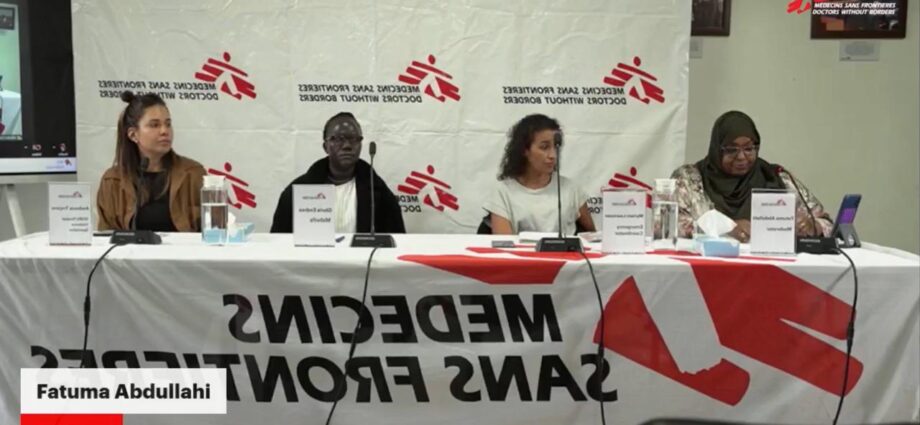
Nairobi, March 31, (Darfur24)
Women in Darfur are calling for protection, care, and justice amid widespread sexual violence across the region, according to a new report by Médecins Sans Frontières (MSF).
The report, “There is something I want to tell you…”: Surviving the Sexual Violence Crisis in Darfur documents patterns of abuse based on survivor testimonies and medical data from MSF-supported facilities, describing sexual violence as a pervasive feature of the conflict.
Between January 2024 and November 2025, at least 3,396 survivors sought treatment in MSF facilities in North and South Darfur. Women and girls accounted for 97 percent of cases, though MSF said the true scale is likely much higher due to limited access to care.
“Sexual violence is not confined to frontlines—it is widespread across communities,” said Ruth Kauffman, MSF Emergency Health Manager, warning that displacement, weak protection systems, and lack of healthcare are driving continued abuses.
MSF data and testimonies indicate that RSF fighters and allied militias are responsible for widespread violations, particularly in North Darfur. Following the capture of El Fasher in October 2025, more than 140 survivors were treated in Tawila, most reporting assaults by armed men during flight from the city.
In displacement camps around Tawila, MSF recorded 732 additional cases in just one month between December 2025 and January 2026, with attacks reported both during journeys and inside camps, where poor security conditions heighten risks.
The report found that sexual violence occurs not only during fighting, but also in daily activities such as farming, collecting water, and traveling to markets. In South Darfur, 34 percent of survivors were attacked while farming, and 22 percent while gathering necessities.
Children were also among the victims, with one in five survivors in South Darfur under the age of 18.
MSF said the patterns point to systematic abuse, often involving multiple perpetrators, and warned that sexual violence is being used as a weapon of war in violation of international humanitarian law.
Survivors and community members called for an end to the violence, demanding protection, access to care, and accountability.
MSF urged all parties to the conflict to prevent sexual violence and hold perpetrators responsible, and called on the United Nations and aid organizations to urgently expand health and protection services across Darfur.