Cairo, January 22 (Darfur24)
The Secretary-General of the Civil Democratic Alliance of Revolutionary Forces (Sumud), Sadiq Al-Mahdi, warned on Wednesday that reliance on a military solution to Sudan’s conflict poses a serious threat to the country’s future, calling instead for activation of the Quartet mechanism and unity among civilian forces around a comprehensive political settlement.
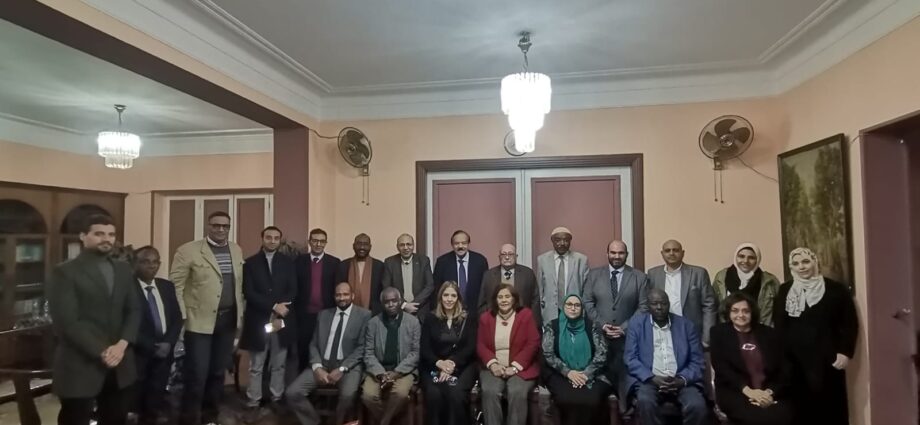
Al-Mahdi made the remarks during a workshop organized by the Egyptian Enterprise Center for Policy and Strategic Studies in Cairo titled “The Future of War in Sudan and Its Repercussions.”
He presented the Sumud alliance’s vision for resolving the Sudanese crisis, reaffirming support for the Quartet plan to halt the war and calling for its implementation. He stressed the need for civilian forces to unite around a national project that ends historical grievances and rebuilds the state on just foundations, arguing that Sudan’s crisis stems from long-accumulated political and structural failures.
Al-Mahdi said the current war reflects a conflict between a democratic civilian project and a militarized authoritarian one, as well as tensions between the center and the periphery. He attributed part of the roots of the conflict to policies of exclusion pursued under the former Salvation regime.
He outlined Sumud’s vision to end the war, restore peace, and revive the goals of the December revolution, emphasizing that an accurate diagnosis of the crisis is essential to reaching viable solutions.
Al-Mahdi said the alliance remains open to all initiatives aimed at ending the war, describing the Quartet plan as a positive step aligned with Sudanese aspirations for peace and democratic transformation. He called for intensified efforts to unify civilian voices and renewed pressure on the warring parties to enter negotiations.
He also announced that Sumud has proposed forming a preparatory committee for a Sudanese dialogue conference, to design a political process including Sumud, the Democratic Bloc, Ta’sis, and other civil forces, excluding the dissolved National Congress party, the Islamic Movement, and their affiliated fronts.
The alliance reiterated its rejection of what it termed “power-sharing peace,” advocating instead for peace based on development, economic recovery, and improved public services. It said it continues direct communication with both sides of the conflict to encourage negotiations, while stressing the need to separate political forces from military institutions.
The workshop concluded with recommendations to activate the Quartet mechanism, support consensus-building among civilian forces, and assess regional and international developments to strengthen prospects for ending the war and achieving a comprehensive political settlement in Sudan.