Port Sudan, January 21 (Darfur24)
The UN High Commissioner for Human Rights has warned that the grave violations committed during the fall of El Fasher in North Darfur must not be repeated in Kadugli and Dilling in South Kordofan, amid reports of intensifying hostilities and rising civilian displacement in the region.
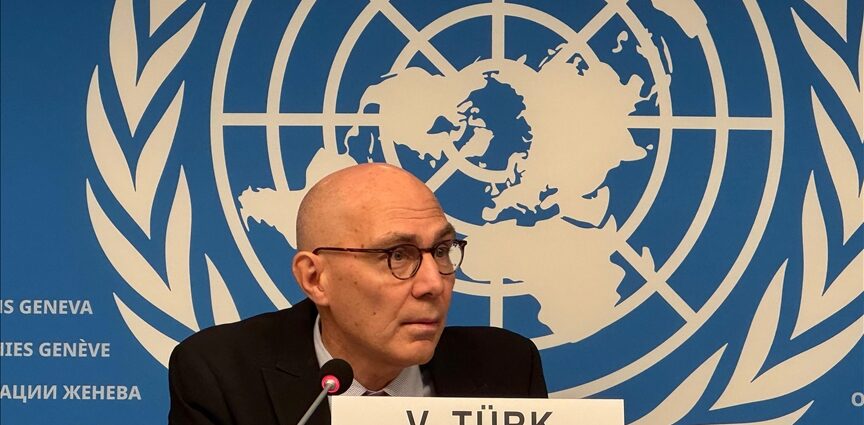
Speaking on behalf of the Office of the High Commissioner for Human Rights (OHCHR), Ravina Shamdasani said High Commissioner Volker Türk concluded a five-day visit to Sudan with a stark message to parties to the conflict: the “horrific violations and abuses” documented during the capture of El Fasher must under no circumstances recur in Kordofan.
During his visit, Türk travelled to Port Sudan, Northern State and Dongola, where he met volunteers, visited an internally displaced persons camp, and toured critical infrastructure sites, including a dam and a power station. At the Al-Afad displacement site in Ad Dabba, Northern State, which hosts around 20,000 displaced people, he witnessed the trauma of civilians who fled violence in El Fasher.
According to OHCHR, the capture of El Fasher in late October was marked by widespread summary executions, sexual violence, abductions for ransom, and dehumanizing treatment of civilians. The assault followed an 18-month siege that cut off access to food, healthcare, and other basic services, alongside sustained attacks on residential areas and civilian infrastructure.
Shamdasani said the High Commissioner raised these concerns directly with representatives of the Rapid Support Forces, urging all parties to ensure that crimes committed during and after the takeover of El Fasher are not repeated in Kadugli, Dilling, or elsewhere in Kordofan.
OHCHR reported receiving accounts of heavy shelling, drone strikes, and air attacks across South Kordofan, leading to widespread destruction and the collapse of essential services. More than 25,000 people have been displaced in the state since late October as fighting escalated.
The High Commissioner called for immediate measures to protect civilians, including guaranteeing safe passage, preventing summary executions and reprisal attacks, and ensuring protection from sexual violence. He also demanded unimpeded humanitarian access to affected areas.
In parallel, the International Criminal Court told the UN Security Council that both war crimes and crimes against humanity were committed during and after the fall of El Fasher, corroborating OHCHR’s findings.
Türk further urged both the Sudanese Armed Forces and the Rapid Support Forces to end attacks on civilian objects, particularly infrastructure indispensable to the population, following his visit to the Merowe dam and hydroelectric power station.
He also appealed to regional actors and external stakeholders with influence over the conflict — including those supplying arms or benefiting economically from the war — to take urgent action to help end the fighting.
Responding to media questions, Shamdasani clarified that the High Commissioner’s meeting with the Rapid Support Forces delegation in Nairobi did not constitute recognition of their self-declared administration. She said Türk had confronted the group over documented violations and emphasized leadership responsibility for abuses, stressing that sexual violence and other crimes were not isolated incidents but reflected systemic patterns.
Shamdasani added that the High Commissioner had met survivors and community members working to rebuild lives amid devastation, describing their resilience despite immense hardship.