N’Djamena, January 18 (Darfur24)
United Nations High Commissioner for Refugees Barham Salih called for urgent international action to support people fleeing Sudan’s war, warning that the country has become the world’s largest displacement crisis and that host nations cannot shoulder the burden alone.
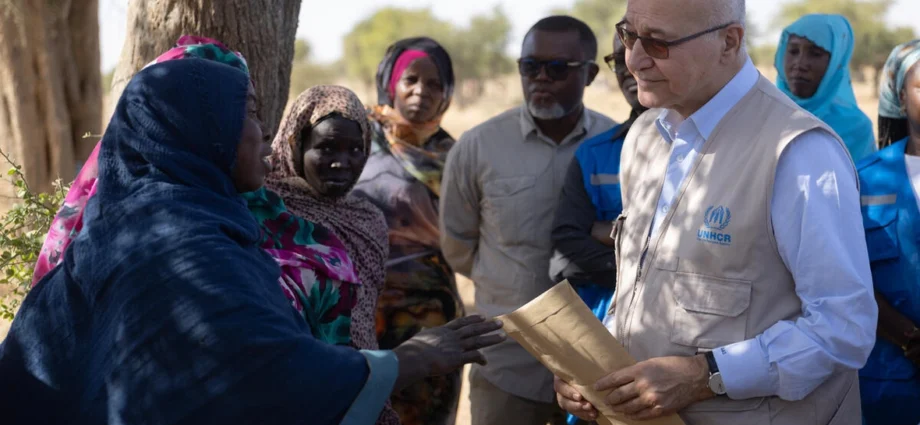
During his first official overseas mission as UNHCR chief, Salih met Sudanese refugee families in eastern Chad who had recently fled renewed fighting in Darfur. Many told him they had been displaced multiple times since the conflict began and had endured years of violence and human rights abuses.
In a statement issued Friday, Salih said he spoke with women who survived rape and with families whose relatives were killed, describing refugees who crossed into Chad carrying nothing but their belongings and hopes of safety.
“What is happening in Sudan is a huge humanitarian catastrophe,” Salih said. “The generous welcome Chad is showing to refugees is a powerful gesture of solidarity.”
He praised Chad for keeping its borders open and granting refugees protection and legal status. “By doing so, Chad is providing security and dignity — the foundations needed for refugees to rebuild their lives and contribute to society,” he added.
Funding shortfalls
UNHCR reported that more than 900,000 Sudanese refugees have arrived in eastern Chad since April 2023, with new arrivals continuing daily.
Sudan has now become the world’s most severe displacement crisis, with more than 12 million people displaced, including over 4.3 million refugees across neighboring countries.
Salih warned that host communities in eastern Chad are themselves in urgent need of assistance, but severe funding shortages mean aid operations are failing to meet even minimum humanitarian requirements.
“The responsibility of hosting these refugees falls on Chad, but other countries must join forces to support it. Chad cannot be left to carry this burden alone,” he said.
Visits to refugee programs
During his tour, Salih visited programs aimed at building self-reliance among refugees and host communities.
In the Iridimi camp, he met students receiving digital and language training to improve access to education and employment. In the Farchana camp, he visited agricultural projects jointly run by refugees and host communities. In Abéché, he met Sudanese lawyers, doctors, and teachers who are now practicing their professions in exile.
In N’Djamena, Salih held talks with President Mohamed Idriss Déby Itno, reaffirming UNHCR’s commitment to supporting refugees and host communities, and praising Chadian communities for welcoming displaced Sudanese despite economic and environmental pressures.