El Fasher, January 16 (Darfur24)
Volunteers in North Darfur’s emergency rooms say they are continuing efforts to provide health and education services to displaced people and residents, amid worsening humanitarian and security conditions across the state.
Emergency Rooms are community-led volunteer networks, formed by youth and activists to respond to crises in their neighborhoods or towns.
In Inka town, northwest of Kutum, the local emergency room announced the reopening of the town’s health center after more than two years of closure. In a statement posted on its official Facebook page and reviewed by Darfur24, the group said it had completed cleaning and rehabilitation work to prepare the facility to receive patients, following the collapse of health services in the area.
The emergency room added that a second phase will focus on securing medical staff and pharmaceutical supplies to ensure continued service delivery.
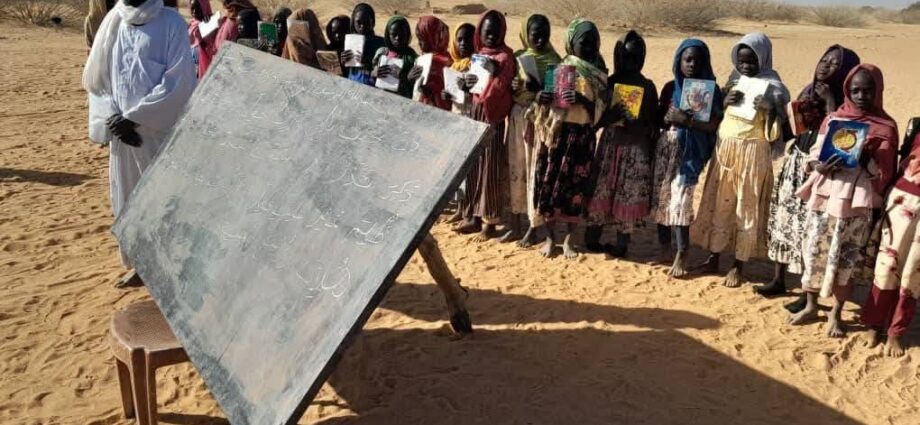
Meanwhile, in Al-Malha locality, about 210 kilometers north of El Fasher, the emergency room reported it is continuing a school feeding program following the reopening of schools after more than a year-long shutdown.
In Jabal Issa, roughly 40 kilometers northwest of Al-Malha, the local emergency room also announced the resumption of schooling after an extended closure.
Adam Hamed Jadu, principal of Jabra Primary School in Jabal Issa, told Darfur24 that the school feeding program, supported by the Norwegian Refugee Council, has helped stabilize student attendance.
However, he said the school faces severe shortages in infrastructure, with students studying outdoors under trees without proper seating, alongside a lack of teaching staff and stationery. He warned of urgent needs for rehabilitation, particularly as the winter season approached.
Jadu appealed to humanitarian and international organizations to support school infrastructure and ensure the sustainability of feeding programs.
Local sources added that schools in Mariqa, Dar Deifa, Al-Malha and Jabal Issa have begun resuming classes after long closures, driven by community initiatives and support from the North Darfur Emergency Chambers Council.