Khartoum, June 23(Darfur 24)
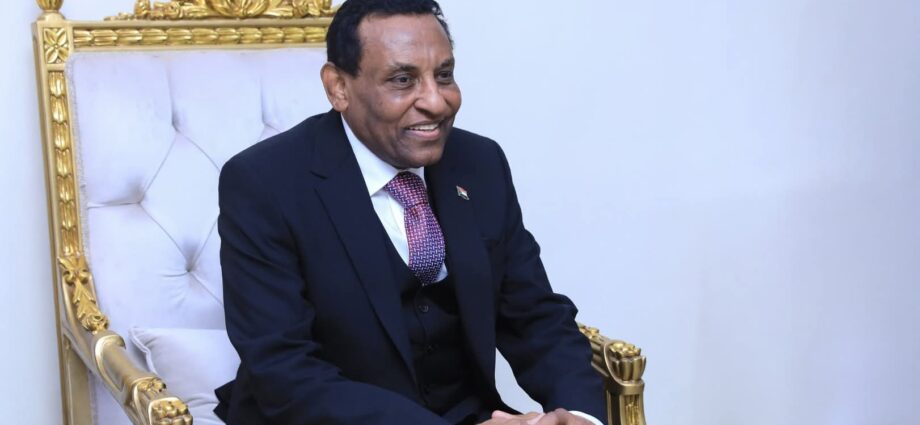
Informed sources revealed on Monday that differences have emerged between the parties to the Juba Peace Agreement regarding Prime Minister Kamil Idris’s vision for participation in the government he intends to announce.
The peace agreement signed in the South Sudanese capital, Juba, in October 2020 granted the leaders of the armed movements a 25% share of the executive government, in addition to representation in the Sovereignty Council, quotas in state governments, and the position of governor of the Darfur region.
Sources told Darfur 24 that “there is a wide disagreement among the Juba Peace Partners regarding Prime Minister Kamil Idris’s vision for participation in the next government.”
They indicated that Kamil Idris held a meeting with the parties to the Juba Peace Agreement, during which he presented his vision for participation in the next government. This vision includes submitting the names and CVs of candidates for ministerial positions, without specifying the positions.
They reported that some parties to the Juba Agreement are demanding that they continue to hold the ministerial portfolios and sovereign positions they obtained under the agreement.
The Ministries of Finance and Minerals are the most prominent portfolios that the movements are demanding to continue holding.
The sources stated that the demand to continue is facing rejection from other parties. The head of the Northern Track, Mohamed Sayed Ahmed Sir al-Khatim (the government), said that the Juba Peace Agreement did not specify ministries by name, but rather spoke of a 25% quota for all parties to the Juba Peace Agreement.
The sources reported that Sovereignty Council member Abdullah Yahya, who defected from the Sudan Liberation Forces Alliance, and Salah Adam Nour Rasas, who defected Members of the Sudan Liberation Movement-Transitional Council, along with the governor of Central Darfur State, Mustafa Tambour, who defected from the Sudan Liberation Movement, have shown flexibility in accepting the Prime Minister’s proposal.
She noted that the leader of the Sudan Liberation Movement, Minni Arko Minawi, and the leader of the Justice and Equality Movement, Gibril Ibrahim, have expressed their rejection of Kamil Idris’s vision for participation in the government.
She explained that all parties to the Juba Peace Agreement from the Darfur movements held a lengthy meeting yesterday to bridge the gap between those who oppose the Prime Minister’s vision and those who support it.
Kamil Idris is working to form a government consisting of 22 ministries, having dismissed ministers from their positions shortly after his appointment as Prime Minister.